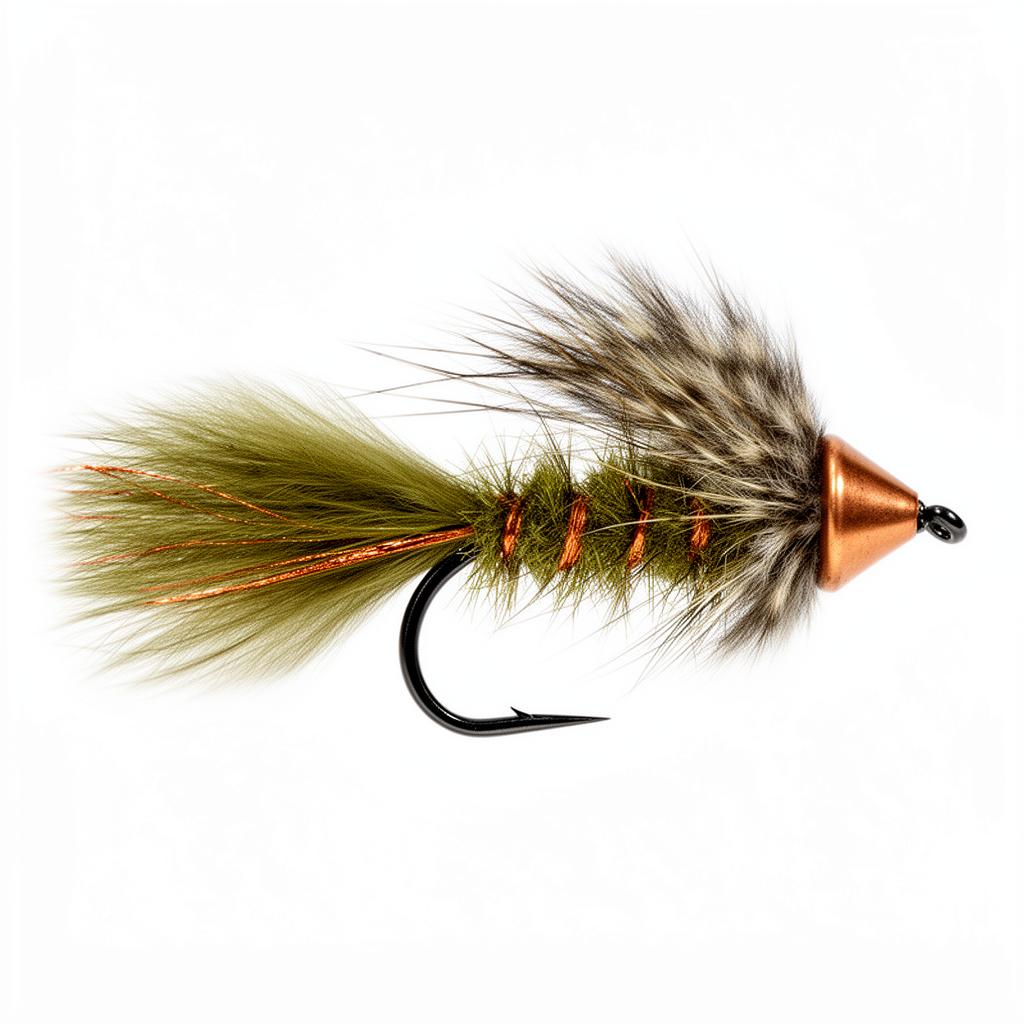
Conehead Woolly Bugger
Imitates: Sculpin, baitfish, large leech — fast-sinking
Quick Reference
- Best Sizes
- #6-10
- Best Season
- Year-round
- Best Conditions
- Deep runs, fast water, big rivers, when you need to get down quickly
- Water Temp
- 40-65°F
- Recommended Tippet
- 2X-4X fluorocarbon
How to Rig It
Single fly on a short leader. Floating line with the conehead doing the sinking work, or sink-tip for the deepest pools.
How to Present It
Cast across-and-down, mend to sink, then strip-pause through the swing. The cone gets the fly down fast and creates a head-jigging motion on the strip.
Why It Works
A standard Woolly Bugger with a copper or tungsten cone head — the cone adds weight to sink the fly fast without ruining the natural pulse of the marabou tail. The cone also creates a jigging head motion that mimics a wounded baitfish.
History
Coneheads became popular in the late 1990s as anglers wanted faster-sinking streamers without the bulk of split shot. Cones are now standard on most modern streamer patterns.
Pro Tip
In fast deep runs where a regular bead-head bugger drifts too high, switch to a copper conehead in olive. The extra weight gets it to the strike zone in a third of the distance.
Frequently Asked Questions
What is a Conehead Woolly Bugger?+
A Woolly Bugger variation with a metal cone head that sinks fast and creates a jigging motion. Best for deep runs and fast water.
Conehead vs bead head bugger?+
Coneheads sink faster and have a more pronounced jigging action. Bead heads are slimmer and better for moderate depths.
What color conehead bugger should I use?+
Olive with copper cone is the most universal. Black with brass cone for low-light; white with silver cone for baitfish imitation.
Not sure if Conehead Woolly Bugger is right today?
Get a fly recommendation based on live water temp, flow, sky, and time of day for any river in the US.
Open Fly Advisor Map
Map Fly Guide