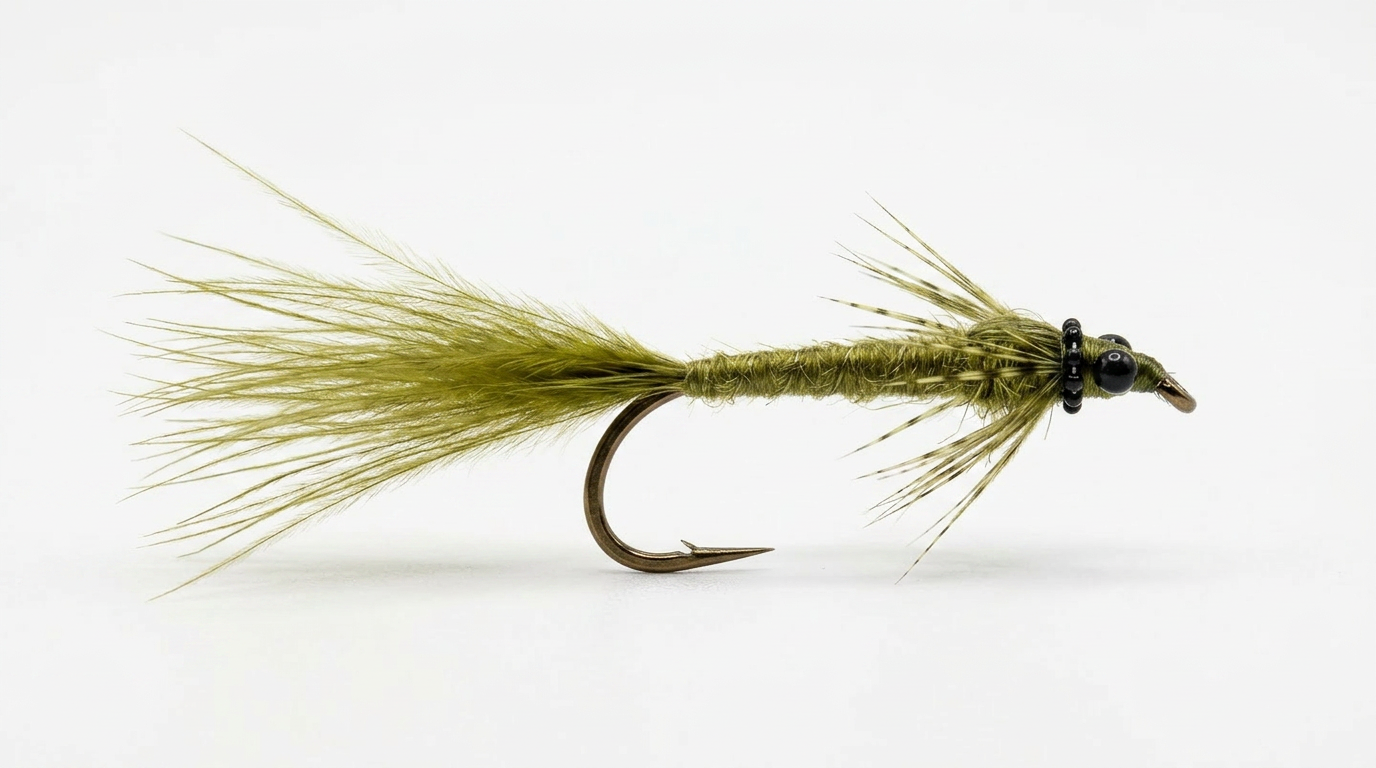
Damselfly Nymph
Imitates: Swimming damselfly nymph
Quick Reference
- Best Sizes
- #10-14
- Best Season
- May-August
- Best Conditions
- Weedy lakes, ponds, shallow flats, reeds, slow edges
- Water Temp
- 55-72°F
- Recommended Tippet
- 3X-4X fluorocarbon
How to Rig It
Fish on a floating or intermediate line with a long leader. Best on stillwater shoals and weed edges.
How to Present It
Slow hand-twist or short strips with long pauses. Real damselfly nymphs swim with a dart-and-glide motion, so avoid stripping too fast.
Why It Works
Damselfly nymphs migrate toward shore and reeds before hatching, and trout patrol those lanes looking for them. The long slender olive body and marabou tail perfectly match one of the most important stillwater food sources in trout lakes.
History
Stillwater specialists in British Columbia, the Intermountain West, and the UK elevated the damselfly nymph from niche bug imitation to essential pattern as lake fishing became more technical and observational.
Pro Tip
Look for reeds and shoals in June. If you see little blue adult damselflies hovering over shoreline weeds, fish a nymph first — the trout are often eating the swimmers, not the adults.
Frequently Asked Questions
How do you fish a Damselfly Nymph?+
Slowly. Use short strips or a hand-twist retrieve with pauses so the fly glides like the real insect. Fast strips kill the illusion.
Where do trout eat damselflies?+
Around reeds, weed beds, shoals, and shorelines on lakes and ponds — especially when nymphs migrate toward shore to hatch.
Not sure if Damselfly Nymph is right today?
Get a fly recommendation based on live water temp, flow, sky, and time of day for any river in the US.
Open Fly Advisor Map
Map Fly Guide