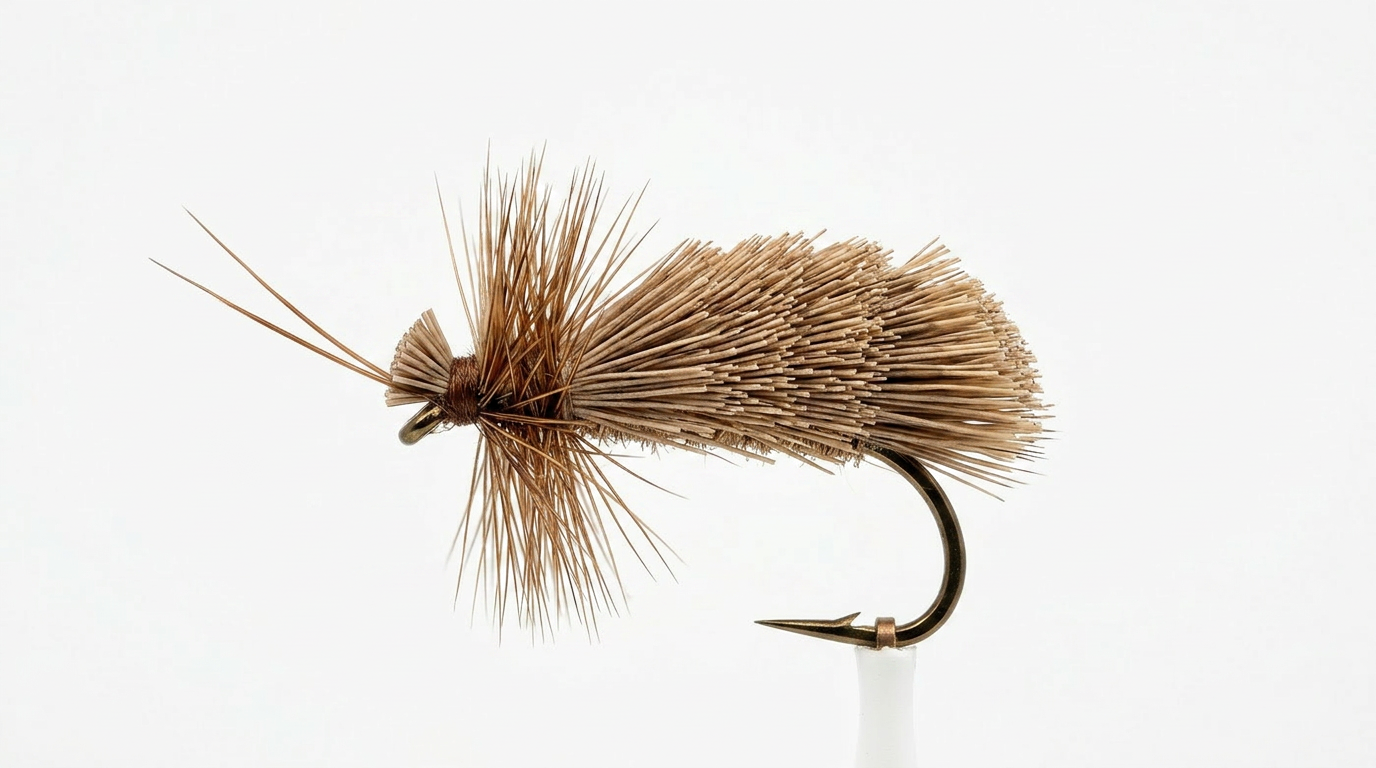
Goddard Caddis
Imitates: Adult caddis (egg-laying or skittering)
Quick Reference
- Best Sizes
- #10-16
- Best Season
- June-September (evening caddis flights)
- Best Conditions
- Choppy water, riffles, freestone rivers, evening egg-laying flights
- Water Temp
- 55-68°F
- Recommended Tippet
- 4X-5X mono
How to Rig It
Single dry on a 9 ft 4X leader. Heavy enough to anchor a small nymph dropper if needed.
How to Present It
Dead-drift, then twitch and skate at the end of the drift. Goddards are built to be moved — egg-laying caddis hop and skitter, and the trimmed deer hair body skates without sinking.
Why It Works
The spun and trimmed deer hair body is essentially unsinkable — it floats like a cork through the most aggressive pocket water. The bullet-shaped silhouette mimics an adult caddis with wings folded over the body, exactly the profile of a skittering egg-layer.
History
Tied by John Goddard and Cliff Henry in England in the 1960s as the G&H Sedge ('Goddard & Henry'). Crossed the Atlantic in the 1970s and became the standard high-floating caddis for Western freestone rivers.
Pro Tip
Skate it. When evening egg-laying caddis are dipping the surface and trout are slashing, twitch the Goddard 6 inches across the surface during the drift. The reaction strikes are violent.
Frequently Asked Questions
How is a Goddard Caddis different from an Elk Hair Caddis?+
The Goddard's body is spun deer hair trimmed to shape — it floats higher and longer, and skates on purpose. Elk Hair sits lower and is meant to dead-drift.
When should I skate a Goddard Caddis?+
Evening egg-laying flights when caddis are dipping the surface, and any time fish are slashing at moving caddis. Dead-drift first, then twitch on the swing.
Not sure if Goddard Caddis is right today?
Get a fly recommendation based on live water temp, flow, sky, and time of day for any river in the US.
Open Fly Advisor Map
Map Fly Guide