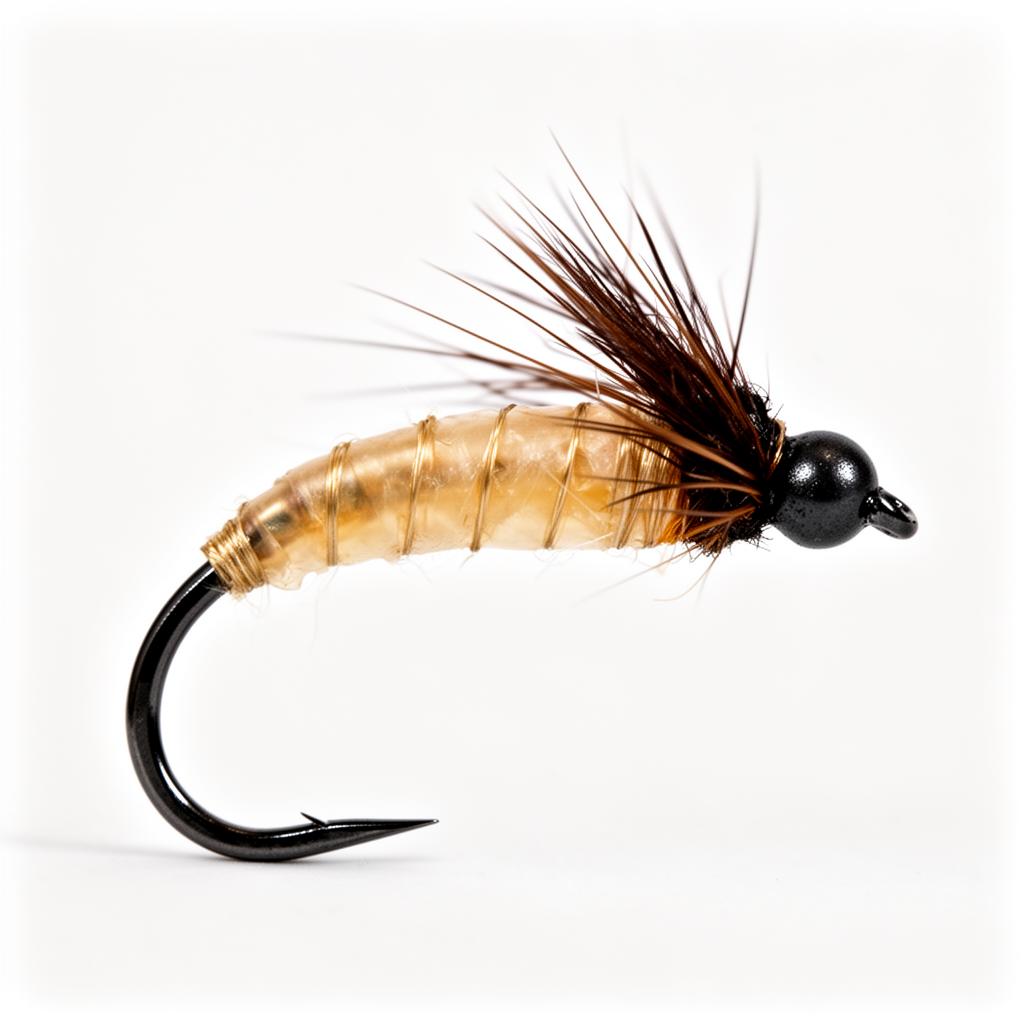
GTI Caddis
Imitates: Caddis larva and free-living caseless caddis
Quick Reference
- Best Sizes
- #12-16
- Best Season
- Spring through fall
- Best Conditions
- Caddis water, freestone rivers, riffles, runs, Euro rigs
- Water Temp
- 45-68°F
- Recommended Tippet
- 4X-5X fluorocarbon
How to Rig It
Use as the point or dropper fly any time you are fishing caddis-rich water. Especially deadly in the weeks before a major caddis hatch.
How to Present It
Dead-drift it tight to the bottom through riffles and runs. Caddis larvae crawl and tumble along the streambed, so a low, drag-free drift is critical.
Why It Works
The translucent body imitates the soft glowing belly of a caseless caddis larva, while the dark thorax suggests the head and legs of a real free-living caddis.
History
Egan developed the GTI Caddis as a modern competition-style caddis larva — slim, durable, fast-sinking, and more realistic than older yarn-based larva patterns.
Pro Tip
Fish it deeper than you think. Caddis larvae live right on the rocks, so if you are not occasionally ticking bottom, you are probably fishing too high.
Frequently Asked Questions
What does GTI stand for?+
It refers to the materials and style of the fly — a glassy, translucent caddis larva imitation built for competition-style fishing.
When are caddis larvae most effective?+
Almost always. Caddis are present in trout water year-round, and a good larva imitation works even when no adults are hatching.
Not sure if GTI Caddis is right today?
Get a fly recommendation based on live water temp, flow, sky, and time of day for any river in the US.
Open Fly Advisor Map
Map Fly Guide