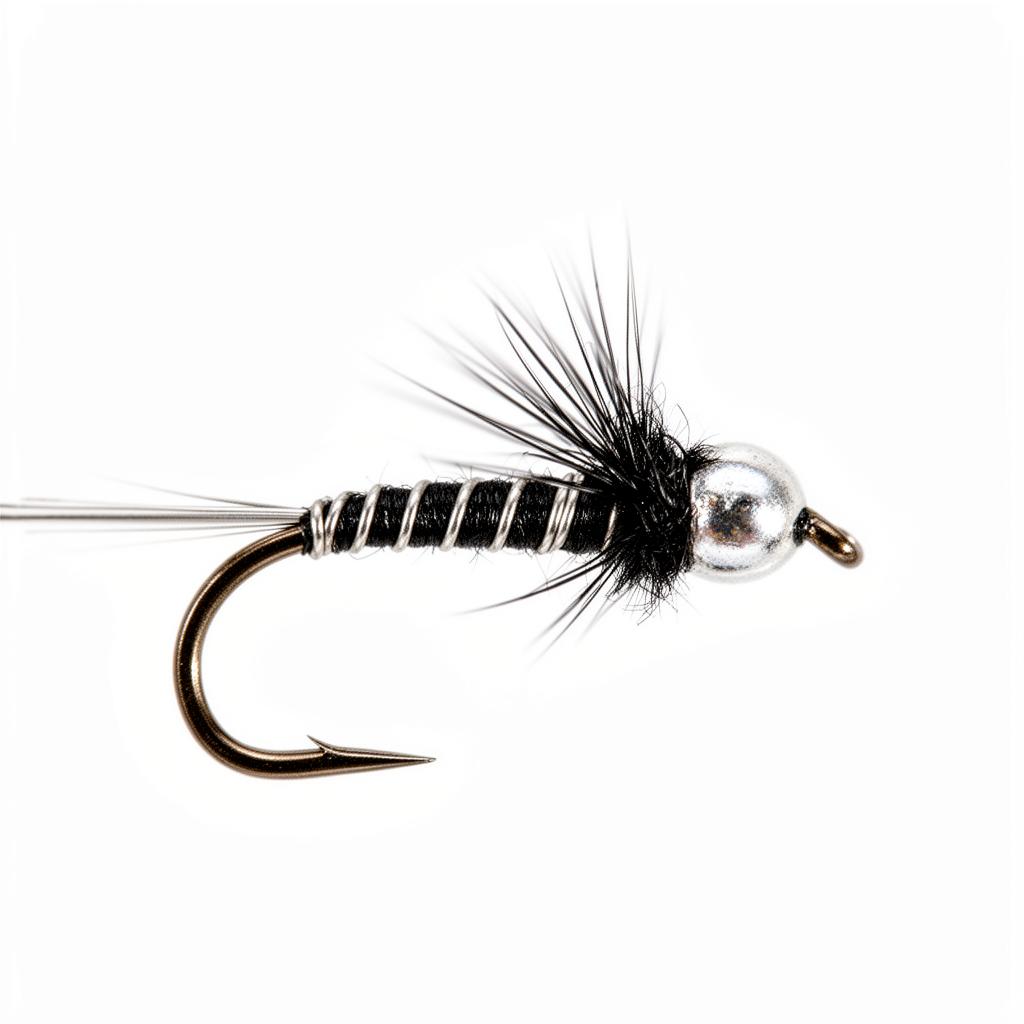
Mercury Midge
Imitates: Midge pupa with air bubble (Chironomid)
Quick Reference
- Best Sizes
- #18-22
- Best Season
- Year-round, especially winter tailwaters
- Best Conditions
- Tailwaters, slow seams, deep pools, picky fish
- Water Temp
- Below 50°F is its sweet spot
- Recommended Tippet
- 6X-7X fluorocarbon
How to Rig It
Tag fly 18" off the back of a slightly larger nymph, or single under a small indicator.
How to Present It
Dead-drift through the slowest, deepest water you can find. The silver-lined glass bead is the entire point — it flashes like an emerging midge's gas bubble.
Why It Works
When trout refuse a Zebra Midge, the Mercury's reflective bead head is often the difference. The flash mimics the air bubble inside a real emerging midge pupa, and tailwater fish keyed on midges will move for it.
History
Pat Dorsey developed the Mercury Midge on Colorado's South Platte River in the 1990s. It became the de facto upgrade to the Zebra Midge for pressured tailwater trout.
Pro Tip
If fish refuse a black Mercury Midge, try the same fly in olive or red. Tailwater color preferences shift hour to hour.
Frequently Asked Questions
What's the difference between a Mercury Midge and a Zebra Midge?+
The Mercury uses a silver-lined glass bead instead of a metal bead, mimicking the gas bubble inside an emerging midge pupa. It often outproduces a Zebra on heavily pressured tailwaters.
When should I fish a Mercury Midge?+
Year-round, but it's the #1 fly on cold-weather tailwaters from November through April when midges are the only active hatch.
Not sure if Mercury Midge is right today?
Get a fly recommendation based on live water temp, flow, sky, and time of day for any river in the US.
Open Fly Advisor Map
Map Fly Guide