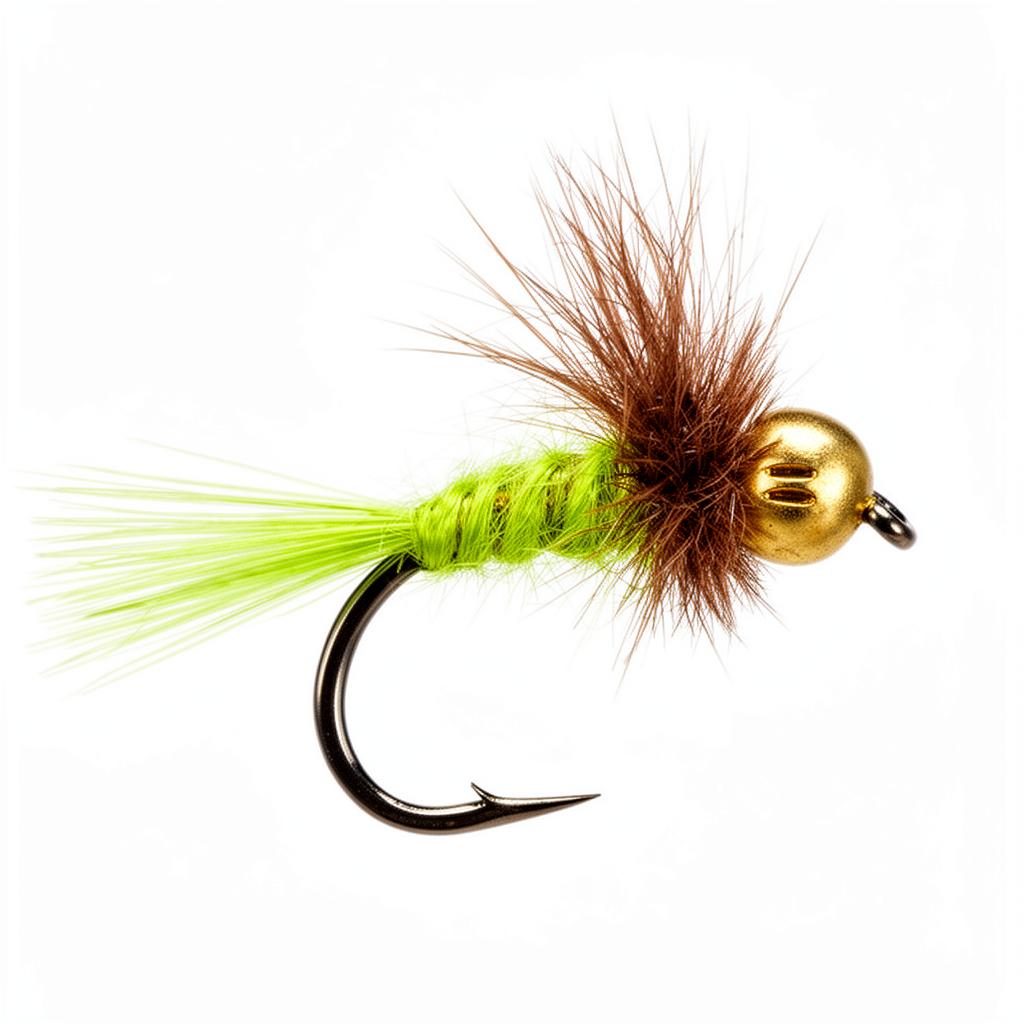
Mop Fly
Imitates: Crane fly larva, hellgrammite, or unidentified juicy thing
Quick Reference
- Best Sizes
- #10-14
- Best Season
- Year-round, especially after rain or stained water
- Best Conditions
- Stained water, high flows, stocked rivers, when nothing else works
- Water Temp
- Any
- Recommended Tippet
- 3X-4X fluorocarbon
How to Rig It
Lead nymph on a jig hook with a tungsten bead. Add a midge dropper 18" below.
How to Present It
Dead-drift on a tight-line nymph rig along the bottom. Bounce it through deep runs and seams.
Why It Works
Nobody's totally sure what it imitates — best guess is a crane fly larva. What we know: trout eat it like candy, especially stocked fish and any trout in stained water. Controversial in the purist world; deadly in the real one.
History
Originated in the early 2010s when Eastern guides realized the microfiber 'mop' material from car-wash mitts and bathroom rugs caught fish. Now standard in every Euro-nymphing box.
Pro Tip
Chartreuse is the universal color, but tan is deadly during caddis emergence and pink crushes stocked rainbows. Carry all three.
Frequently Asked Questions
What does a Mop Fly imitate?+
Most likely a crane fly larva (which trout eat constantly), or just a generic large protein source. It works whether fish 'should' eat it or not.
Is the Mop Fly considered a real fly?+
Hotly debated. Purists hate it; guides keep one in every box. It catches fish — that's the only test that matters.
Not sure if Mop Fly is right today?
Get a fly recommendation based on live water temp, flow, sky, and time of day for any river in the US.
Open Fly Advisor Map
Map Fly Guide