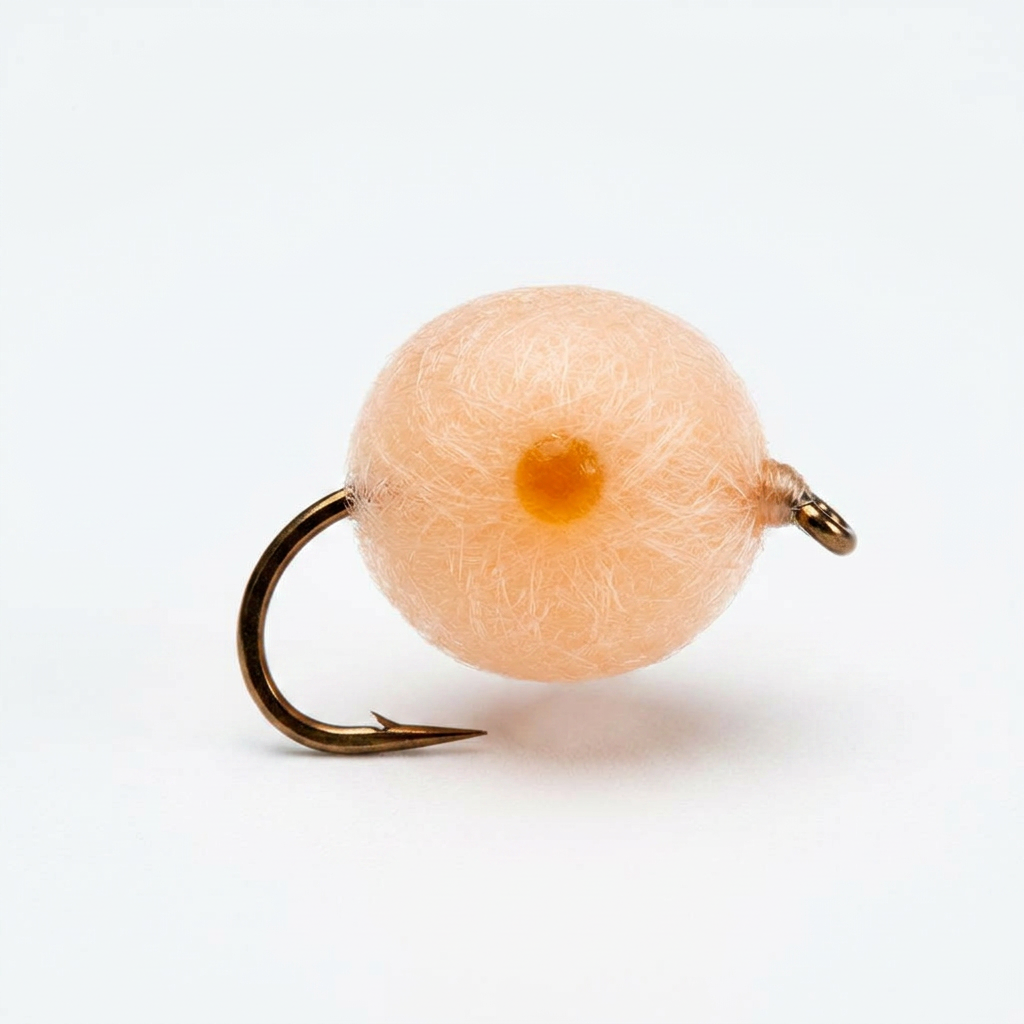
Otter Egg
Imitates: Trout, salmon, or steelhead egg
Quick Reference
- Best Sizes
- #12-16
- Best Season
- Fall and spring (during and after spawn)
- Best Conditions
- Spawning runs, tailwaters below spawning beds, Great Lakes tribs, alpine lake inlets
- Water Temp
- 38-55°F
- Recommended Tippet
- 4X-5X fluorocarbon
How to Rig It
Single egg on a short leader under an indicator, or trailed behind a stonefly or worm. Often the hot fly when fish are stacked below spawning beds.
How to Present It
Dead-drift just off the bottom through gravel runs and tailouts below spawning fish. Zero drag — eggs don't swim.
Why It Works
When trout, salmon, or steelhead are spawning, downstream fish gorge on drifting eggs. The Otter Egg's translucent foam absorbs water like a real egg, looking soft and 'milky' instead of plastic. It's one of the most realistic egg patterns ever made.
History
Otter's Soft Milking Egg material was developed specifically to mimic the look and feel of real salmonid eggs — soft, translucent, slightly milky underwater. It quickly replaced yarn and harder bead patterns in the boxes of serious egg-pattern fishers.
Pro Tip
Peach and pale orange are the most universal colors. Match natural egg color to local species — pinker for steelhead and salmon, more orange or chartreuse for stained water and Great Lakes runs.
Frequently Asked Questions
When should I fish an egg pattern?+
Anytime fish are spawning upstream — fall for browns and brook trout, spring for rainbows and steelhead. Trout below the redds will eat eggs all day.
Otter Egg vs Y2K vs bead?+
The Otter Egg is the most realistic soft egg. The Y2K is a brighter attractor egg cluster. Plastic beads imitate single eggs even more precisely but are banned in some waters — know your regulations.
Not sure if Otter Egg is right today?
Get a fly recommendation based on live water temp, flow, sky, and time of day for any river in the US.
Open Fly Advisor Map
Map Fly Guide