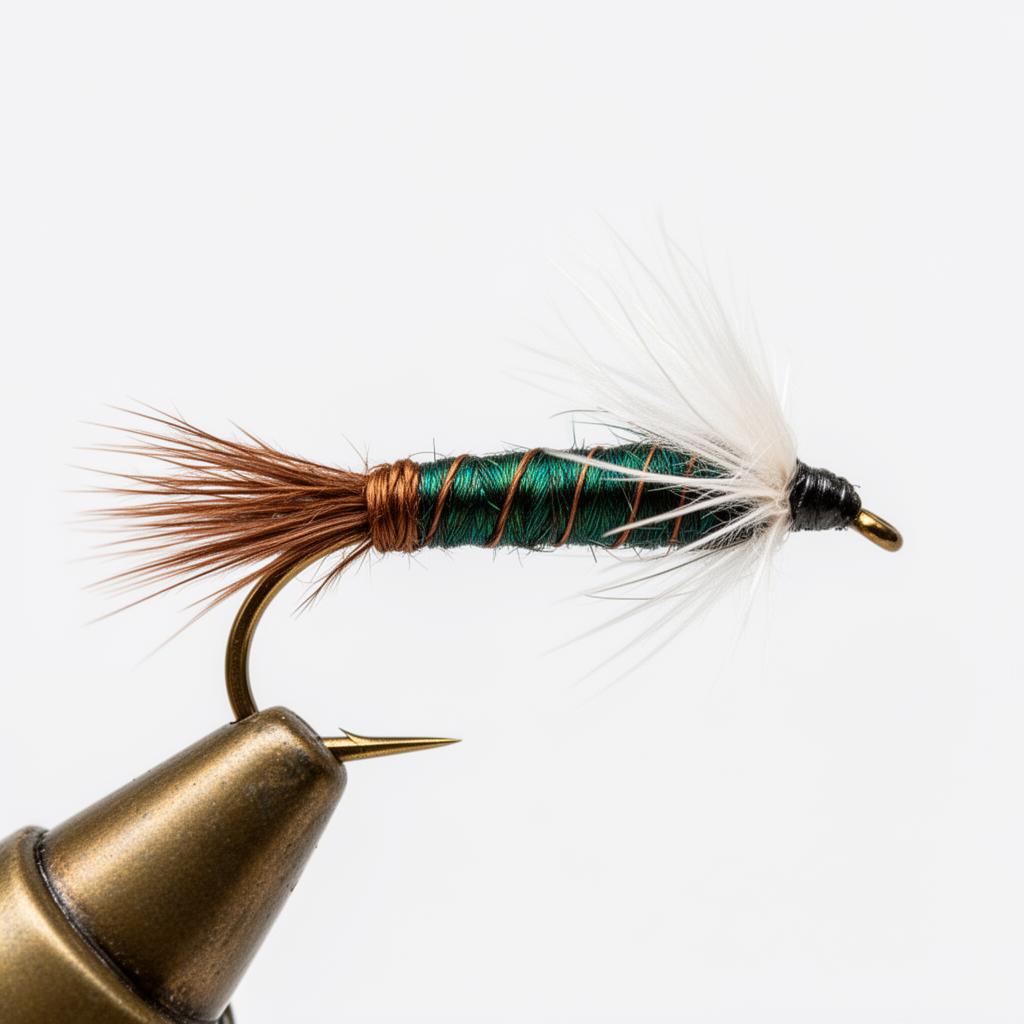
Renegade
Imitates: Attractor — small dark hatching insects, midge clusters, terrestrials
Quick Reference
- Best Sizes
- #12-18
- Best Season
- Year-round, classic high-country summer fly
- Best Conditions
- Mountain streams, high lakes, riffles, broken water, cutthroat and brook trout water
- Water Temp
- 45-65°F
- Recommended Tippet
- 5X mono
How to Rig It
Fish alone as a searching dry, or as the indicator dry in a hopper-dropper. The fore-and-aft hackle floats it like a cork.
How to Present It
Dead-drift through pocket water, riffles, and seams. The two-color hackle creates a distinctive flicker that triggers strikes.
Why It Works
The brown rear hackle and white front hackle bracket a peacock body — high visibility for the angler, irresistible silhouette for opportunistic stream trout.
History
Originated by Taylor 'Beartracks' Williams in the early 1900s at Sun Valley, Idaho. Ernest Hemingway was a documented fan and fished the Renegade extensively on Western waters.
Pro Tip
On high-country lakes when nothing is hatching but trout are cruising, twitch a #14 Renegade on the surface. The white front hackle puts out tiny ripples that can pull cruising fish from across a cove.
Frequently Asked Questions
What is a fore-and-aft fly?+
A pattern with a hackle wound at both the rear AND the front of the body, with no wing. The Renegade is the most famous fore-and-aft fly.
Why two different hackle colors?+
The white front hackle gives the angler high visibility on the water; the brown rear hackle adds contrast and suggests legs or wings to the trout.
Not sure if Renegade is right today?
Get a fly recommendation based on live water temp, flow, sky, and time of day for any river in the US.
Open Fly Advisor Map
Map Fly Guide