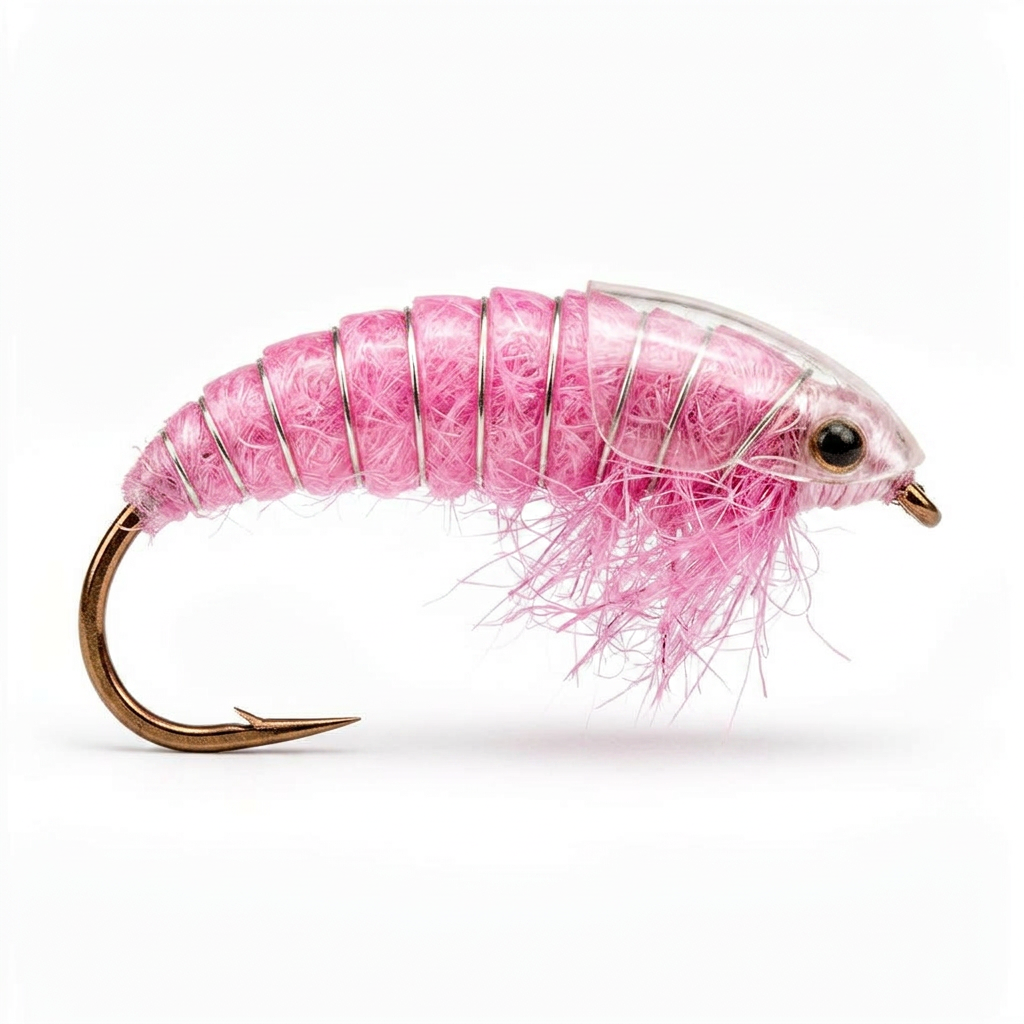
UV Pink Scud
Imitates: Freshwater scud (Gammarus / Hyalella), often when molting or wounded
Quick Reference
- Best Sizes
- #12-16
- Best Season
- Year-round (best in tailwaters and stillwater spring/fall)
- Best Conditions
- Tailwaters, spring creeks, weedy lakes, slow shoals
- Water Temp
- 40-65°F
- Recommended Tippet
- 5X fluorocarbon
How to Rig It
Indicator nymph rig as the point fly, or trailer behind a leech on stillwater. Add weight to keep it ticking the bottom.
How to Present It
Dead-drift through weed edges and gravel runs. On stillwater, slow hand-twist retrieve along the shoals and weed beds.
Why It Works
Live scuds turn pinkish-orange when they molt or die, and trout key on that color hard. The UV reflective dubbing pulses in low light and stained water, making this one of the deadliest searching scud patterns ever tied.
History
Pink scud variants exploded in popularity on tailwaters like the Bighorn, Missouri, and Green, where biologists confirmed that dying and molting scuds turn pink. Adding UV dubbing in the 2000s gave guides a new edge in dirty water.
Pro Tip
If you're nymphing a tailwater and getting refusals on naturals, swap to a UV pink scud. The color change alone often triggers eats from fish that have ignored gray and olive all morning.
Frequently Asked Questions
Why pink for a scud pattern?+
Live scuds turn bright pink-orange when they molt or die, and trout learn to focus on that easy-meal color. Pink also shows up in stained water.
Where do scuds live?+
In weedy, mineral-rich water — tailwaters, spring creeks, and many stillwaters. If a river grows watercress or moss, it almost certainly holds scuds.
Not sure if UV Pink Scud is right today?
Get a fly recommendation based on live water temp, flow, sky, and time of day for any river in the US.
Open Fly Advisor Map
Map Fly Guide