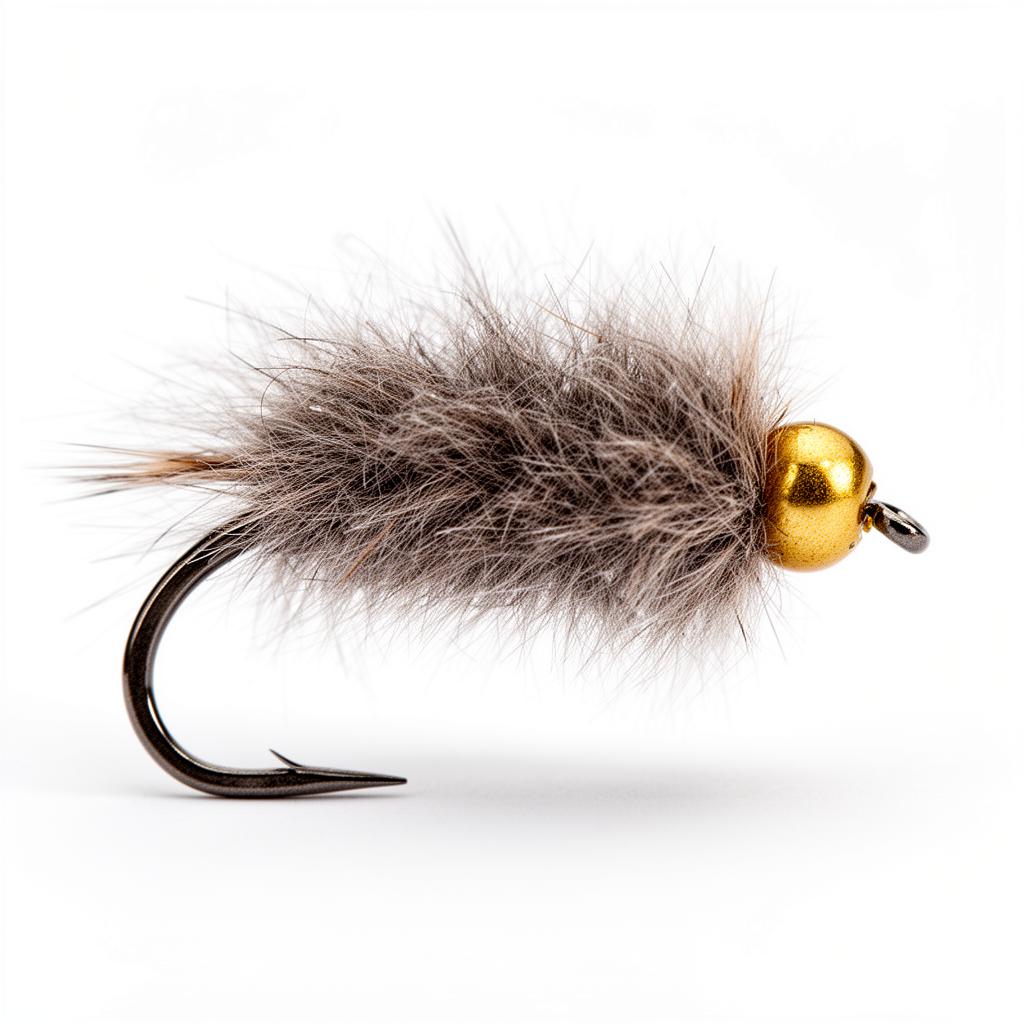
Walt's Worm
Imitates: Cranefly larva, caddis larva, generic buggy nymph
Quick Reference
- Best Sizes
- #12-18
- Best Season
- Year-round
- Best Conditions
- Searching pattern, all water types, Euro-nymphing rigs
- Water Temp
- 40-65°F
- Recommended Tippet
- 5X fluorocarbon
How to Rig It
Anchor fly on a Euro-nymph rig with a smaller dropper 18" up. Or under an indicator as the lead fly in a two-fly rig.
How to Present It
Tight-line nymph or dead-drift through riffles, runs, and pocket water. The shaggy hare's ear dubbing breathes naturally — let it tumble.
Why It Works
It's just hare's ear dubbing on a hook with a tungsten bead. No tail, no rib, no wing case. The buggy fibers trap air and pulse in the current — trout see life, not pattern.
History
Walt Young designed it on Pennsylvania's Penns Creek in the 1980s as the simplest possible nymph that still caught fish. Joe Humphreys and George Daniel made it famous in Eastern Euro-nymphing circles.
Pro Tip
The 'Sexy Walt's' variation adds a hot-pink UV ice dub collar behind the bead — a Frenchie-style hot-spot. Carry both versions.
Frequently Asked Questions
What does Walt's Worm imitate?+
Most likely a cranefly larva, but it works as a generic buggy nymph that suggests caddis larvae and other crawlers too.
Why is Walt's Worm so simple?+
Walt Young proved that trout key on movement and silhouette, not detail. A shaggy ball of hare's ear dubbing imitates more food forms than any complicated pattern.
What size Walt's Worm should I fish?+
#14-16 is the most universal. Drop to #18 on tailwaters and clear water; bump to #12 in stained water or for stocked fish.
Not sure if Walt's Worm is right today?
Get a fly recommendation based on live water temp, flow, sky, and time of day for any river in the US.
Open Fly Advisor Map
Map Fly Guide