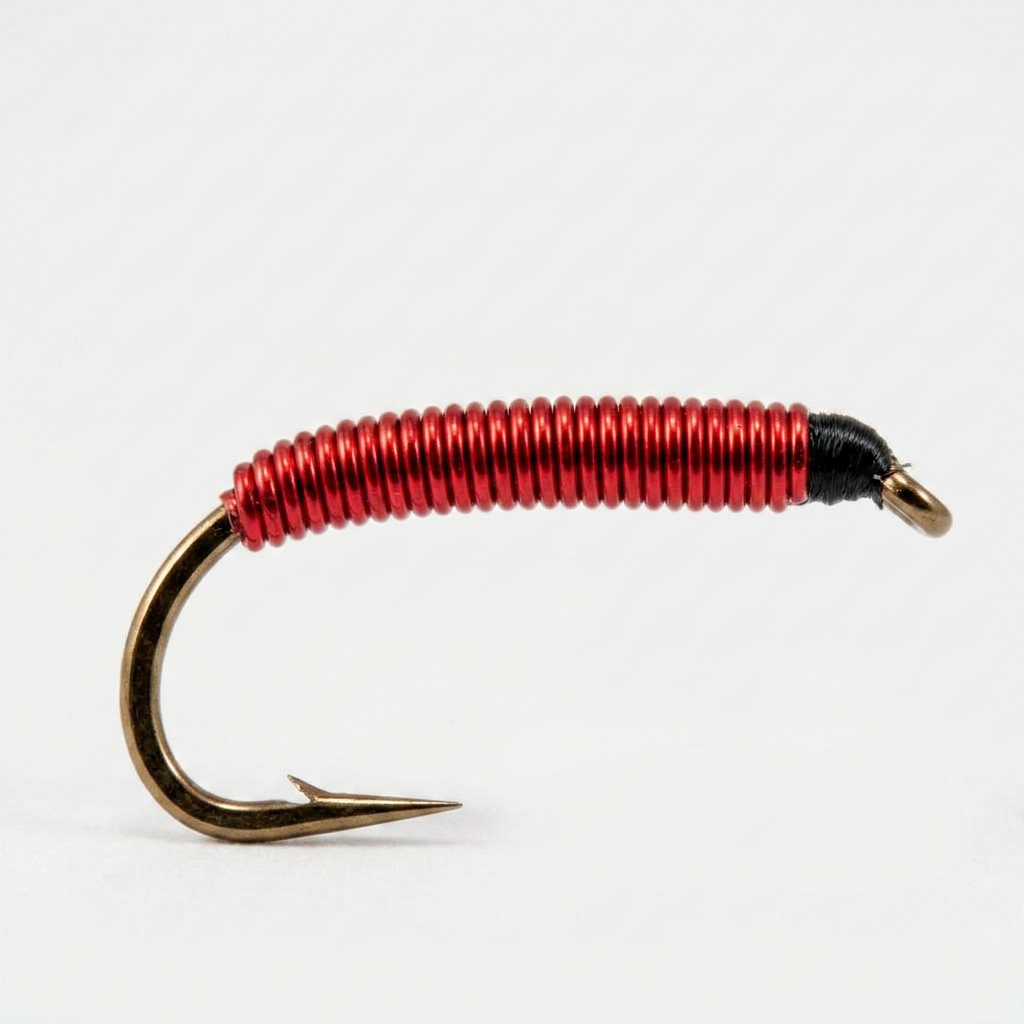
Wire Worm
Imitates: Aquatic worm, midge larva, generic high-water trigger
Quick Reference
- Best Sizes
- #10-14
- Best Season
- Year-round (essential during runoff and high water)
- Best Conditions
- High flows, stained water, tailwaters, deep runs
- Water Temp
- 38-60°F
- Recommended Tippet
- 4X-5X fluorocarbon
How to Rig It
Heavy anchor fly in a Euro-nymph or indicator rig. Run a smaller bug on the dropper.
How to Present It
Dead-drift deep along the bottom. The wire body sinks instantly without needing splitshot, perfect for getting into the strike zone in heavy current.
Why It Works
It's effectively a casting weight that catches fish. The slim red or copper profile imitates aquatic worms and midge larvae, but the real magic is depth — it gets your rig down fast in conditions where soft-bodied worms blow out of the zone.
History
Wire-bodied worms grew out of the Euro-nymphing scene as a way to combine weight and imitation in one fly, eliminating splitshot. Red wire became the go-to color thanks to the universal trigger of bloodworms and aquatic worms.
Pro Tip
During spring runoff and after a rainstorm, tie this on as your point fly with a hot-spot Pheasant Tail dropper. It's one of the most reliable dirty-water rigs in fly fishing.
Frequently Asked Questions
Is the Wire Worm a worm or a midge?+
Both, depending on color. Red imitates aquatic worms and bloodworm midge larvae; copper or olive leans more generic. Trout don't overthink it.
Do I still need splitshot with a Wire Worm?+
Usually not in moderate water — that's the whole point. In very deep or fast flows, a small split or a tungsten dropper bead helps.
Not sure if Wire Worm is right today?
Get a fly recommendation based on live water temp, flow, sky, and time of day for any river in the US.
Open Fly Advisor Map
Map Fly Guide