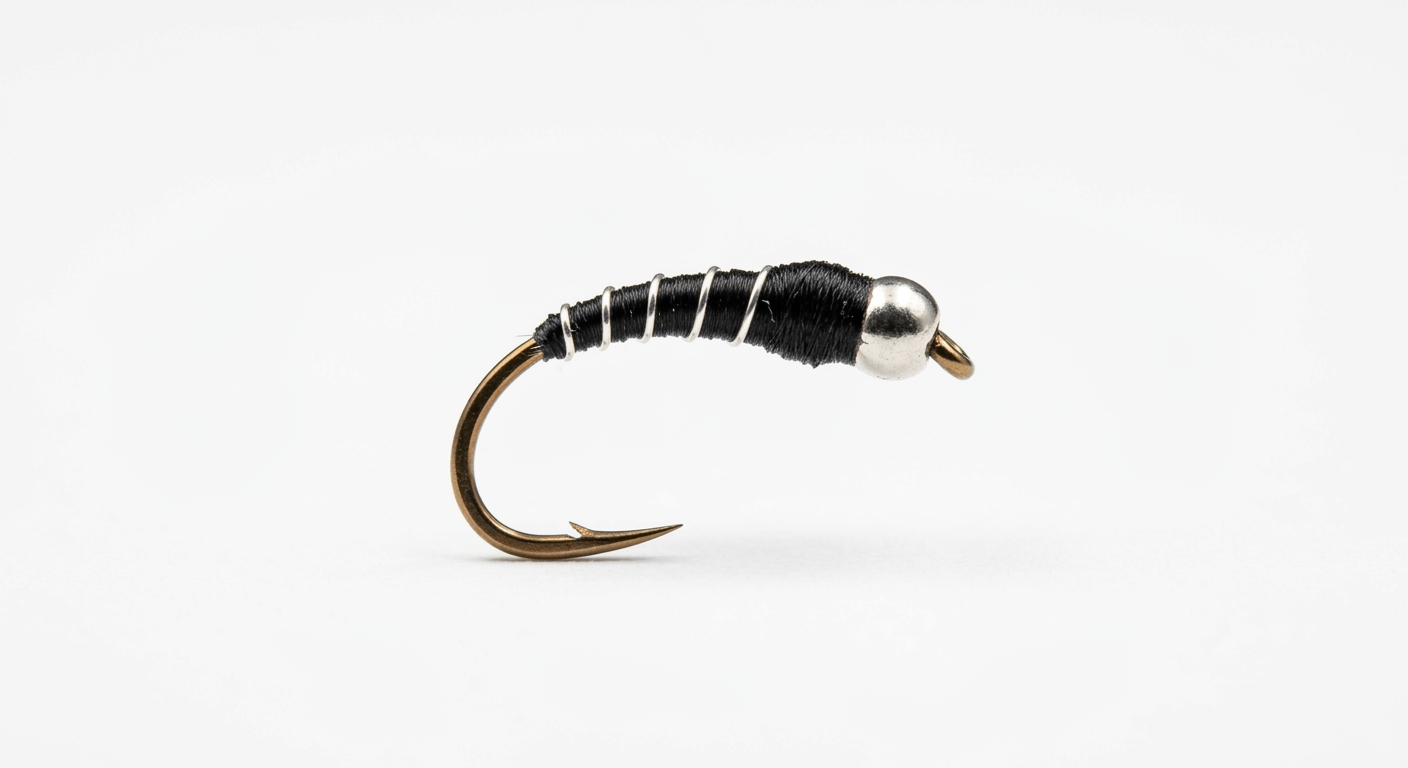
Zebra Midge
Imitates: Midge pupa (Chironomid)
Quick Reference
- Best Sizes
- #18-22
- Best Season
- Year-round (essential in winter)
- Best Conditions
- Cold tailwaters, slow pools, clear water
- Water Temp
- Below 50°F is its sweet spot
- Recommended Tippet
- 6X fluorocarbon
How to Rig It
Drop 18–24" below a small indicator or as a trailer behind a heavier nymph.
How to Present It
Dead-drift through deep slow seams and tailouts. The slower the better in winter.
Why It Works
Midges hatch 365 days a year and are the #1 winter food source for trout. The slim profile and tiny tungsten bead get it down fast in cold, slow water where trout are stacked up.
History
Tied by Ted Welling on the San Juan River in the 1990s, the Zebra Midge spread quickly because it's almost impossible to tie wrong: thread, wire, bead. Three materials, infinite trout.
Pro Tip
Carry red, black, and olive in #18-22. If they refuse one color for 20 minutes, swap — color preference shifts daily on tailwaters.
Frequently Asked Questions
What size Zebra Midge should I use?+
Start with #20 in black with a silver bead. Drop to #22 in clear winter tailwaters; bump to #18 when flows are stained.
Is the Zebra Midge a nymph or emerger?+
It is a midge pupa imitation fished as a nymph, deep and slow on the bottom.
What tippet for a Zebra Midge?+
6X fluorocarbon. Fluoro sinks the fly faster and is nearly invisible to picky tailwater trout.
Not sure if Zebra Midge is right today?
Get a fly recommendation based on live water temp, flow, sky, and time of day for any river in the US.
Open Fly Advisor Map
Map Fly Guide