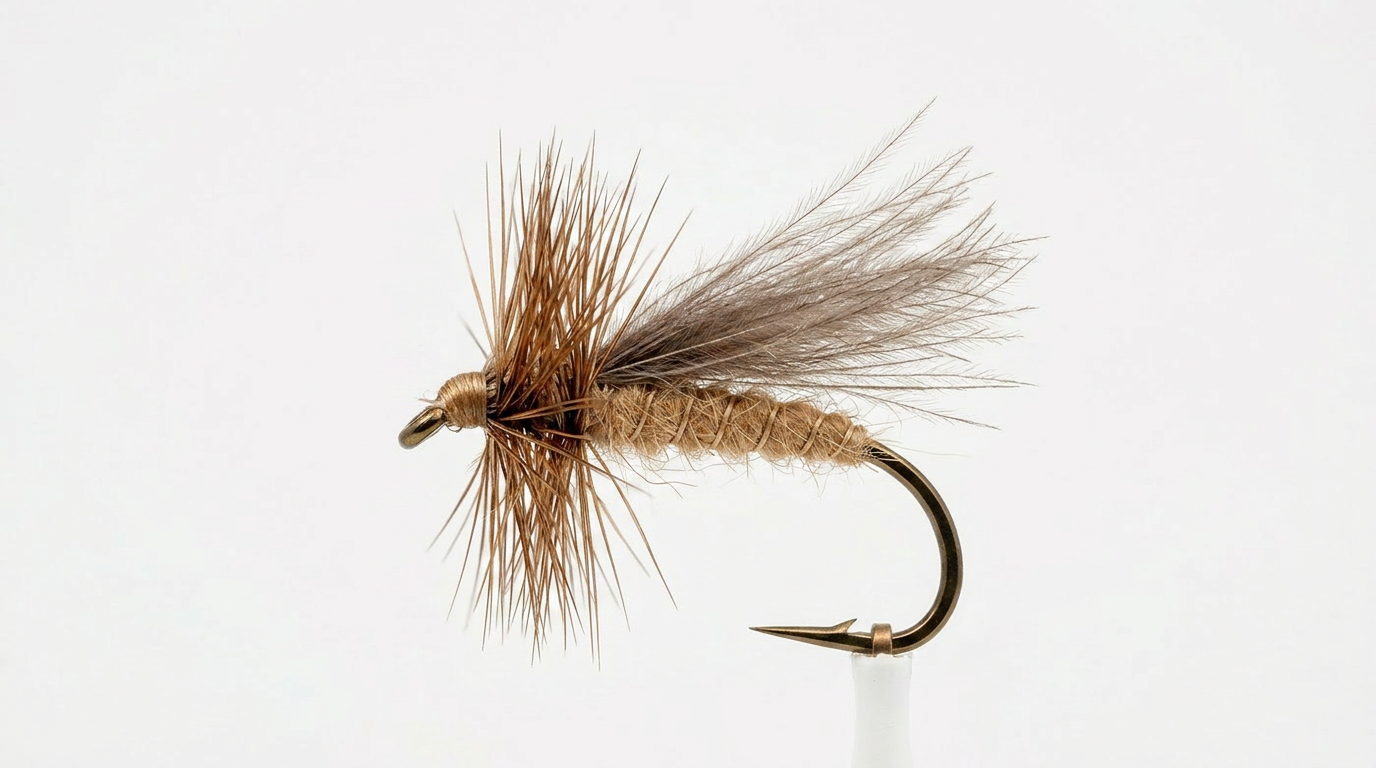
CDC Caddis
Imitates: Adult caddis, emerging caddis pupa in film
Quick Reference
- Best Sizes
- #14-20
- Best Season
- April-October (peaks May-July)
- Best Conditions
- Caddis hatches, flat or slow water, selective risers, evening rise
- Water Temp
- 50-65°F
- Recommended Tippet
- 5X-6X mono or fluorocarbon
How to Rig It
Single dry on a long 10-12 ft leader for spooky fish. Avoid floatant on the CDC — use desiccant powder only.
How to Present It
Drag-free dead-drift in slicks and tailouts. Twitch once at the end of the drift to imitate an adult skating off the surface.
Why It Works
CDC (cul de canard) feathers trap thousands of microscopic air bubbles, so the fly sits half-in, half-out of the film exactly like an emerging caddis. Trout that have refused Elk Hair Caddis all evening will eat a CDC Caddis on the first drift.
History
Popularized in Europe in the 1980s by tiers like Marjan Fratnik and Hans Weilenmann (the CDC & Elk). The CDC technique came from the French and Swiss competition scene before sweeping American tailwaters.
Pro Tip
Never use gel floatant on CDC — it mats the fibers and ruins the fly. After every fish, rinse, blot, and shake in desiccant powder. A fresh CDC Caddis floats like cork.
Frequently Asked Questions
What is CDC in fly tying?+
CDC stands for cul de canard — feathers from around the duck's preen gland that are naturally water-repellent and trap air, perfect for emerger and dry fly wings.
When should I fish a CDC Caddis instead of an Elk Hair Caddis?+
Switch to CDC on flat or slow water, during evening hatches, and any time fish are refusing the Elk Hair. The lower-riding profile fools selective trout.
Why won't my CDC fly float?+
You probably used gel floatant. CDC must be cleaned, dried, and shaken in desiccant powder only — never gel. A matted CDC fly is dead until rebuilt.
Not sure if CDC Caddis is right today?
Get a fly recommendation based on live water temp, flow, sky, and time of day for any river in the US.
Open Fly Advisor Map
Map Fly Guide