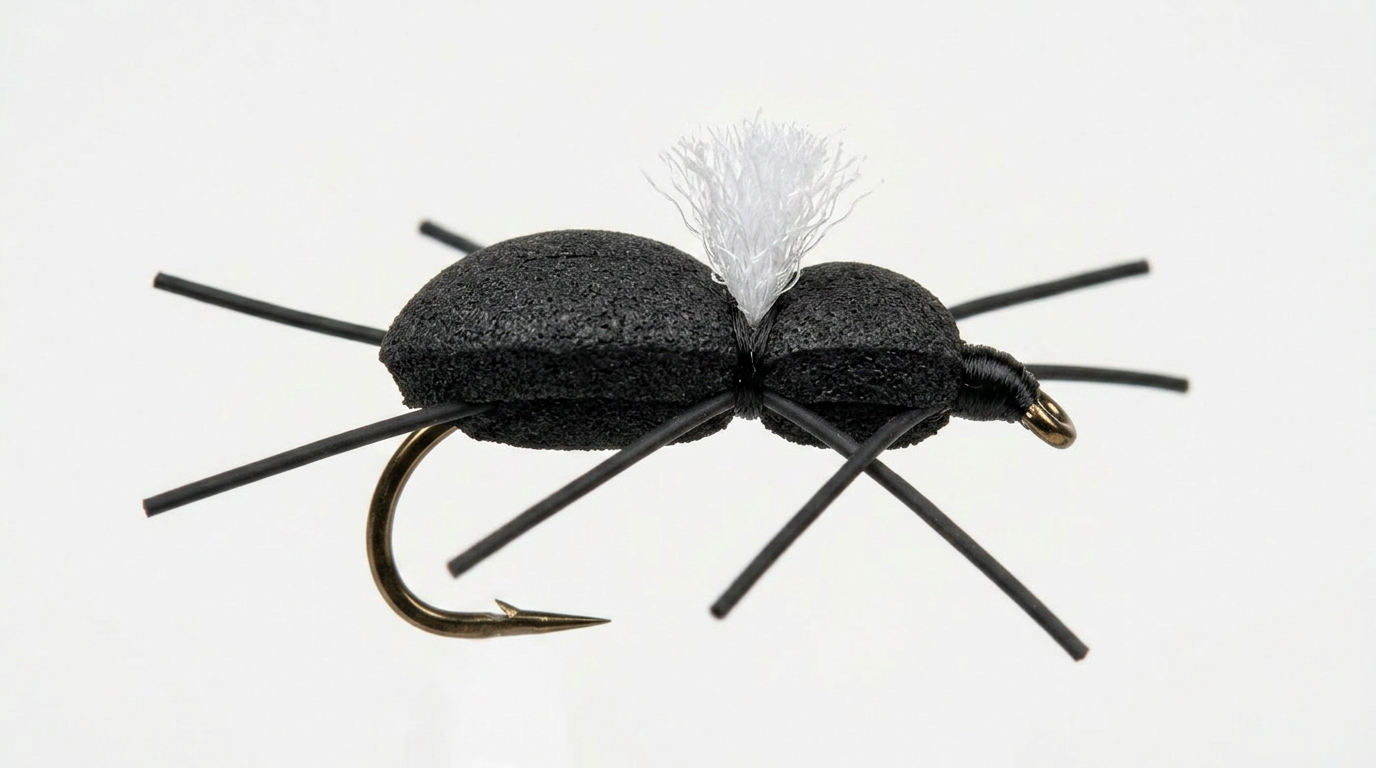
Foam Ant
Imitates: Adult ant, flying ant, drowned terrestrial
Quick Reference
- Best Sizes
- #12-18
- Best Season
- June-September
- Best Conditions
- Summer afternoons, banks, overhanging grass, flat water, flying-ant falls
- Water Temp
- 55-70°F
- Recommended Tippet
- 5X-6X mono
How to Rig It
Single dry on a long 10-12 ft leader, or as the lead dry with a small dropper below.
How to Present It
Dead-drift tight to grassy banks, under overhanging trees, and through slow seams. On flying-ant days, fish it anywhere trout are rising softly.
Why It Works
Ants are a high-protein mistake food that falls helplessly into the water all summer. Trout see them as an easy bonus meal. The segmented foam body and rubber legs float forever while still matching the ant silhouette fish recognize instantly.
History
Ant patterns became American staples once anglers realized trout will ignore mayflies to key on a summer ant fall. Modern foam versions improved the classic fur ant by floating longer and supporting dropper rigs.
Pro Tip
If trout are rising with no obvious hatch in July or August, tie on an ant first. Many 'mystery rises' are fish eating terrestrials, not insects hatching from the water.
Frequently Asked Questions
When should I fish a Foam Ant?+
All summer, especially on hot afternoons, windy days, and during flying-ant falls after rain or humid weather. It's one of the best no-hatch searching dries ever tied.
Why do trout eat ants?+
Ants are calorie-dense, common, and helpless when they land on water. Trout learn quickly that an ant on the surface is easy food with almost no risk.
Not sure if Foam Ant is right today?
Get a fly recommendation based on live water temp, flow, sky, and time of day for any river in the US.
Open Fly Advisor Map
Map Fly Guide