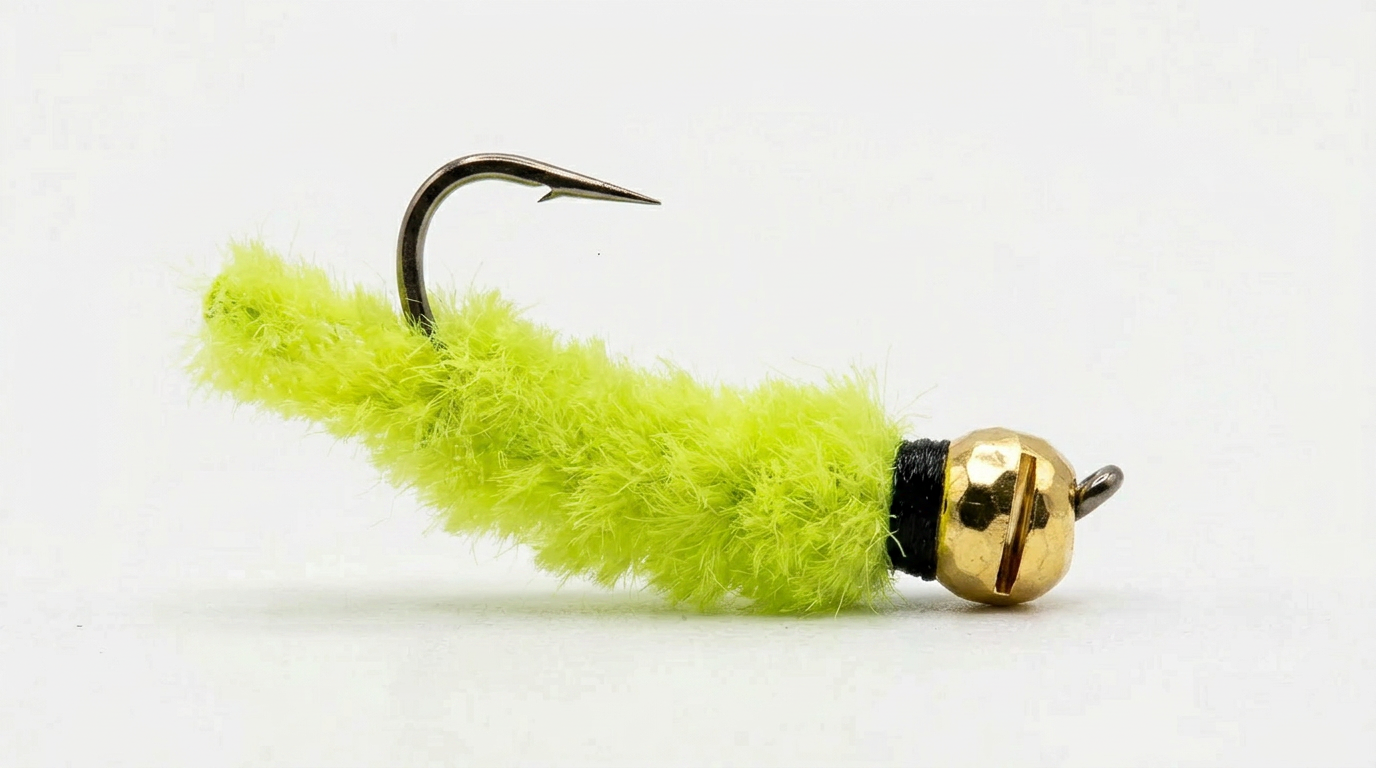
Mop Jig
Imitates: Crane fly larva, grub, big juicy worm-like food
Quick Reference
- Best Sizes
- #10-14
- Best Season
- Year-round (peaks in high or stained water)
- Best Conditions
- High water, runoff, stained tailwaters, stocked trout
- Water Temp
- 38-65°F
- Recommended Tippet
- 3X-4X fluorocarbon
How to Rig It
Point fly on a Euro nymph rig or under an indicator. Drop a smaller perdigon or zebra midge 16" behind.
How to Present It
Dead-drift along the bottom of deep runs and seams. The mop chenille pulses and breathes in the current — let the fly do the work.
Why It Works
A single chartreuse mop chenille fiber looks like a fat juicy crane fly larva — high-calorie food trout can't refuse, especially in high or stained water when visibility is short and a big easy meal trumps a small accurate one. The tungsten jig head puts it on the bottom fast.
History
The Mop Fly was 'discovered' around 2015 when an angler tied car-wash mop fibers onto a hook as a joke. It's now banned from several competitions because it works too well. The jig version added tungsten and a jig hook for Euro nymphing.
Pro Tip
Carry chartreuse, cream, and tan. Chartreuse for high or stained water and stocked trout, cream for tailwaters with scuds, and tan when crane fly larvae are active in midsummer.
Frequently Asked Questions
Is the Mop Jig considered cheating?+
Some purists hate it — it's been banned from several fly fishing competitions because it's too effective. But it imitates real food (crane fly larvae) and trout eat it because it works.
When should I fish a Mop Jig?+
High or off-color water, freshly stocked trout, and any time you need to put a high-visibility, high-calorie meal in front of fish that aren't being selective.
Not sure if Mop Jig is right today?
Get a fly recommendation based on live water temp, flow, sky, and time of day for any river in the US.
Open Fly Advisor Map
Map Fly Guide