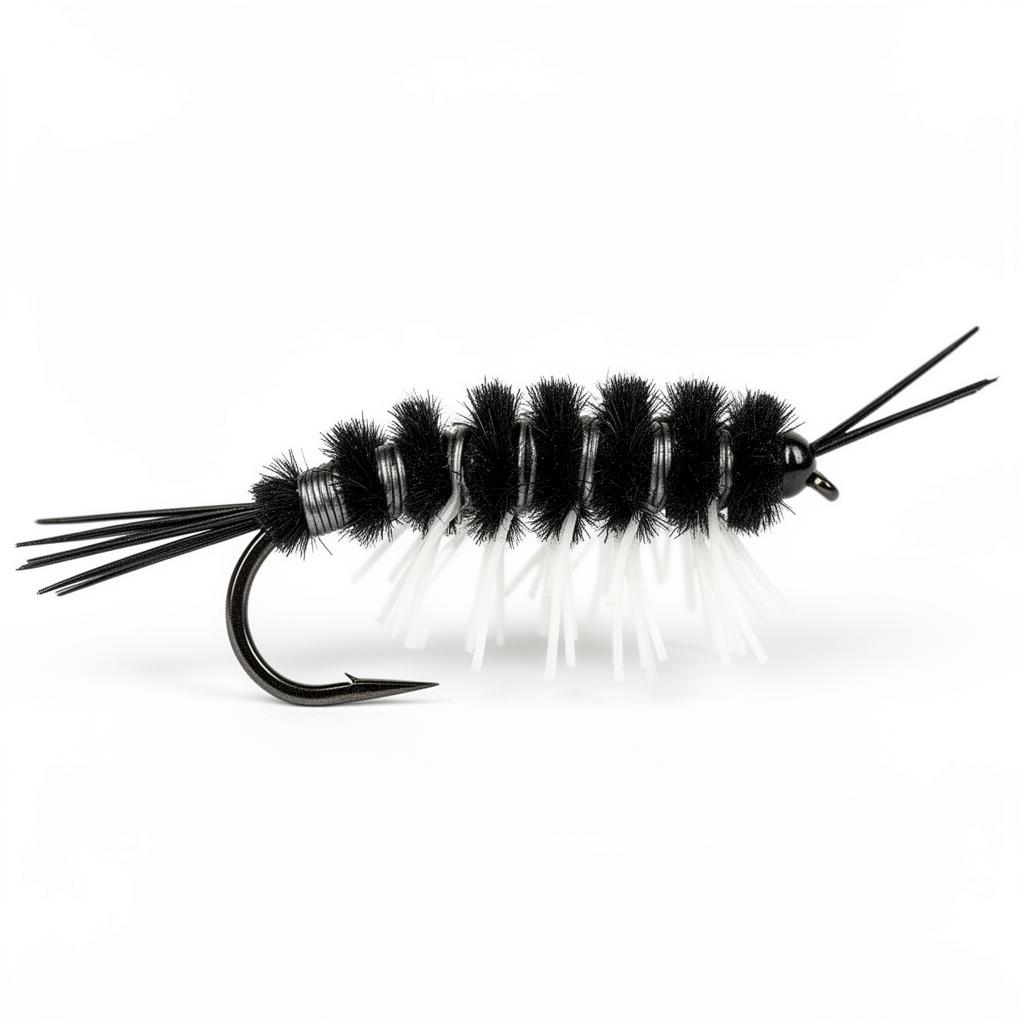
Girdle Bug
Imitates: Stonefly nymph, big terrestrial nymph, attractor
Quick Reference
- Best Sizes
- #4-8
- Best Season
- Year-round (peaks spring runoff and summer)
- Best Conditions
- Big rivers, deep fast runs, stonefly water, high/stained water
- Water Temp
- 40-65°F
- Recommended Tippet
- 3X-4X fluorocarbon
How to Rig It
Lead fly under an indicator with split shot 12" above, or as a Euro-nymph anchor. Drop a smaller nymph 18" behind.
How to Present It
Dead-drift along deep fast runs and bank seams. The white rubber legs flicker in the current and trigger reaction strikes from fish that ignore more realistic patterns.
Why It Works
Pure attractor pattern — black chenille body matches dark stonefly nymphs, white rubber legs add motion that fish can't ignore. In stained spring runoff water, the contrast and movement out-fish realistic patterns. Heavy enough to ride the bottom in big water.
History
Originated as the 'Yuk Bug' in Montana in the 1960s. Became known as the Girdle Bug for the way the white rubber legs bind around the body like a girdle. A Western big-river staple for decades.
Pro Tip
Spring runoff is Girdle Bug season. When the river goes off-color in May-June, swap from realistic stonefly nymphs to a #4 black Girdle Bug with white legs. The contrast and motion get bit when nothing realistic works.
Frequently Asked Questions
What is a Girdle Bug fly?+
A black chenille stonefly nymph with white rubber legs flaring out from the body. A Western attractor pattern for high water and big trout.
When should I fish a Girdle Bug?+
Year-round, but especially during spring runoff when water is high and stained. The white rubber legs trigger reaction strikes when realistic flies don't get noticed.
Not sure if Girdle Bug is right today?
Get a fly recommendation based on live water temp, flow, sky, and time of day for any river in the US.
Open Fly Advisor Map
Map Fly Guide