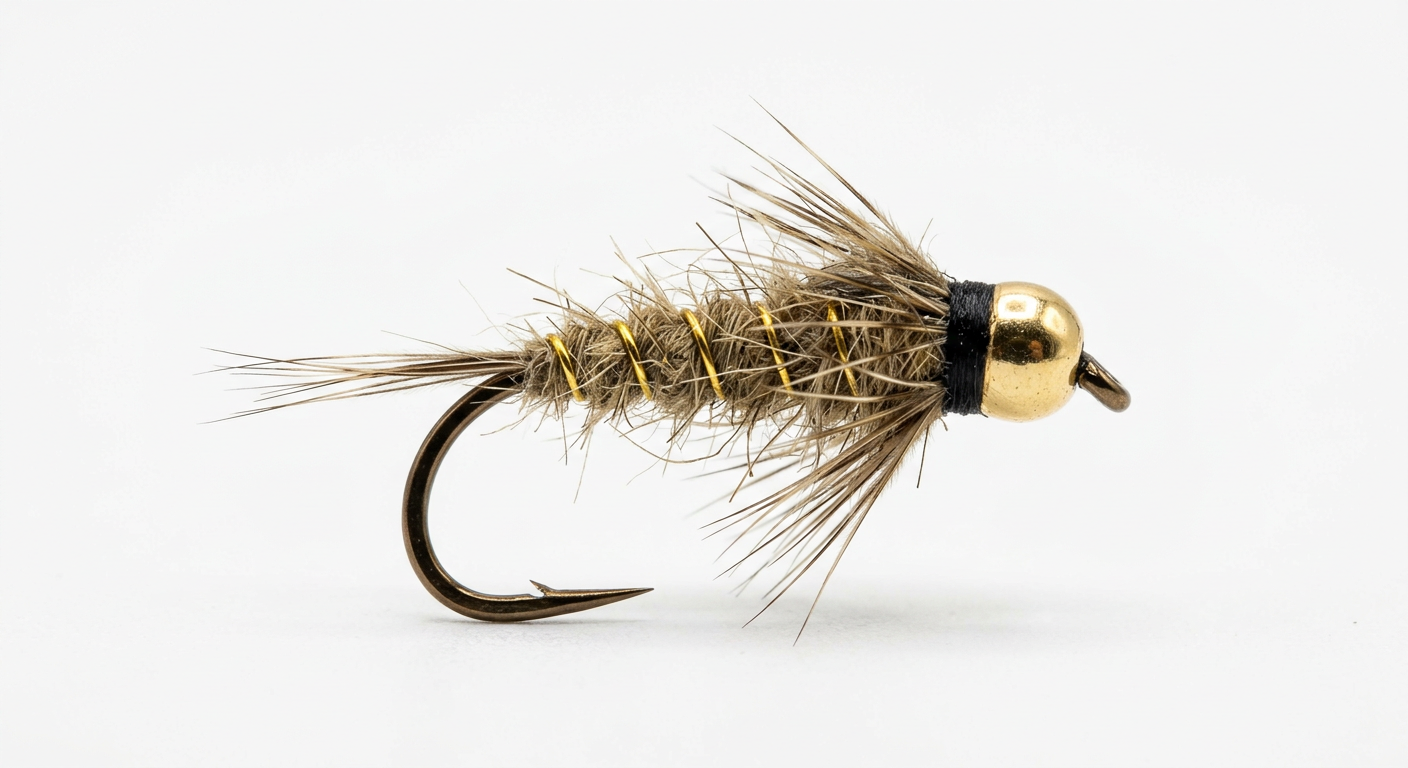
Hare's Ear
Imitates: Caddis pupa, mayfly nymph, generic buggy stuff
Quick Reference
- Best Sizes
- #12-18
- Best Season
- Year-round
- Best Conditions
- All water types — the most versatile nymph ever tied
- Water Temp
- 40-70°F
- Recommended Tippet
- 4X-5X
How to Rig It
Lead nymph in a two-fly rig with a smaller midge or PT trailing.
How to Present It
Dead-drift, tight-line nymph, or swing it on the rise at the end of the drift to imitate a rising caddis.
Why It Works
The buggy hare's mask dubbing breathes and traps tiny air bubbles, making it look alive in the water. It doesn't imitate one bug — it suggests dozens.
History
Originated in England in the 1800s. Still in every guide's box because nothing better has been invented for 'just throw something and see.'
Pro Tip
Fish a #14 beadhead Hare's Ear in spring runoff — high, off-color water hides the fly's generic profile and trout grab it on instinct.
Frequently Asked Questions
Why is the Hare's Ear so popular?+
It imitates many insects at once — caddis pupae, mayfly nymphs, scuds, and emergers — making it the most versatile nymph in fly fishing.
Not sure if Hare's Ear is right today?
Get a fly recommendation based on live water temp, flow, sky, and time of day for any river in the US.
Open Fly Advisor Map
Map Fly Guide