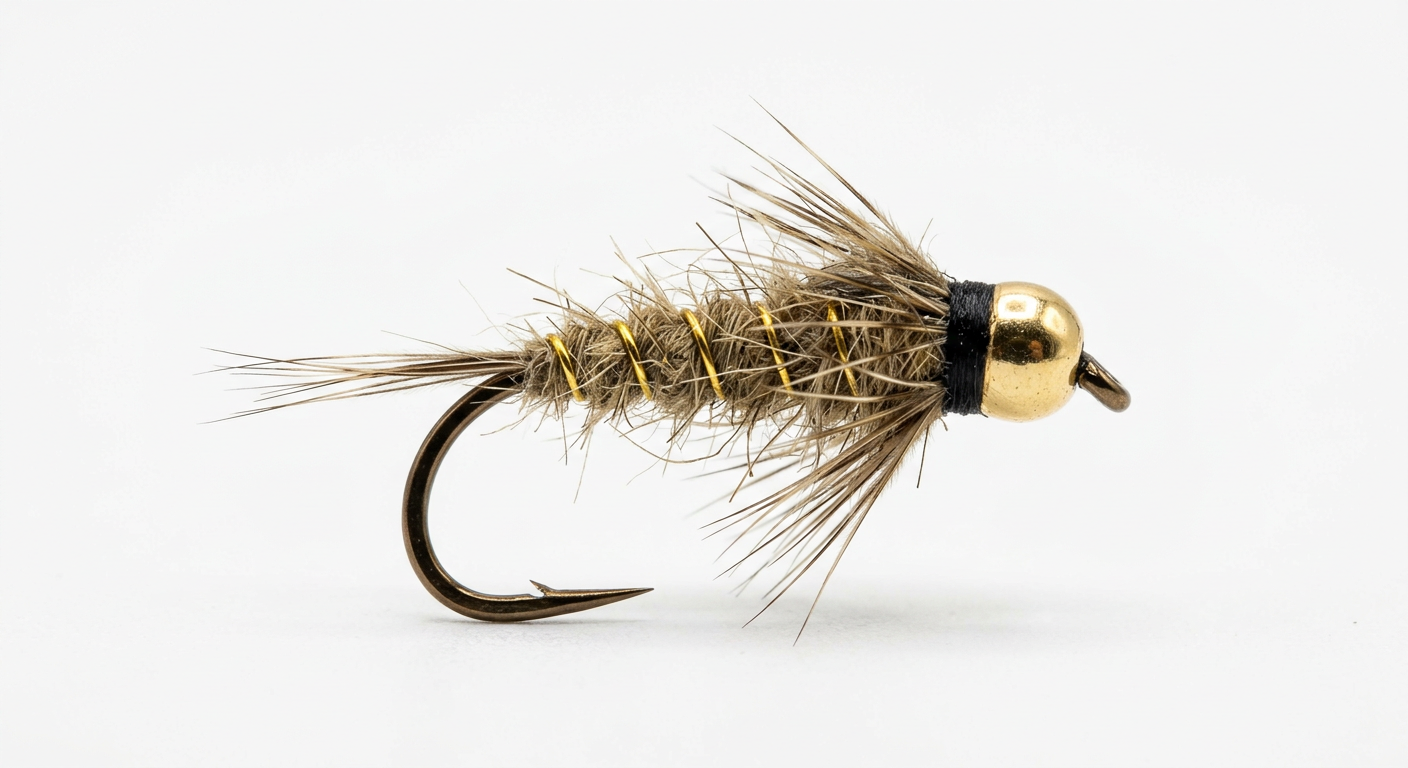
Hare's Ear Wet Fly
Imitates: Emerging mayfly, drowned adult, or generic active nymph
Quick Reference
- Best Sizes
- #12-16
- Best Season
- Spring through fall during mayfly and caddis activity
- Best Conditions
- Riffles, runs, swing water, classic Eastern freestone streams
- Water Temp
- 48-65°F
- Recommended Tippet
- 5X mono
How to Rig It
Fish on a downstream swing, often as part of a classic two- or three-fly wet rig with a soft hackle and a heavier point fly.
How to Present It
Cast across and slightly down, then let the line tighten and swing the fly through the run at the end of the drift. Strikes are usually authoritative.
Why It Works
The spiky hare's mask body breathes and pulses in the current and the soft hackle pulses like emerging legs — it is one of the oldest and deadliest impressionistic patterns ever tied.
History
The wet-fly Hare's Ear predates the dry version by centuries. It's a foundational English wet fly, brought to America in the 1800s and still effective in its original form before tungsten beads or modern materials.
Pro Tip
Don't ignore the swing. Modern anglers obsess over dead-drifts, but a swung Hare's Ear at the end of a drift catches a tremendous number of fish — especially during caddis emergences.
Frequently Asked Questions
How is the Hare's Ear wet different from the nymph?+
The wet has a soft hen or partridge hackle for the swing; the nymph version has no hackle and is fished dead-drift on the bottom.
What's the best way to fish a Hare's Ear wet fly?+
Down-and-across swing in a classic wet-fly cast. Let the fly rise through the column at the end of the drift to imitate an emerger.
Not sure if Hare's Ear Wet Fly is right today?
Get a fly recommendation based on live water temp, flow, sky, and time of day for any river in the US.
Open Fly Advisor Map
Map Fly Guide