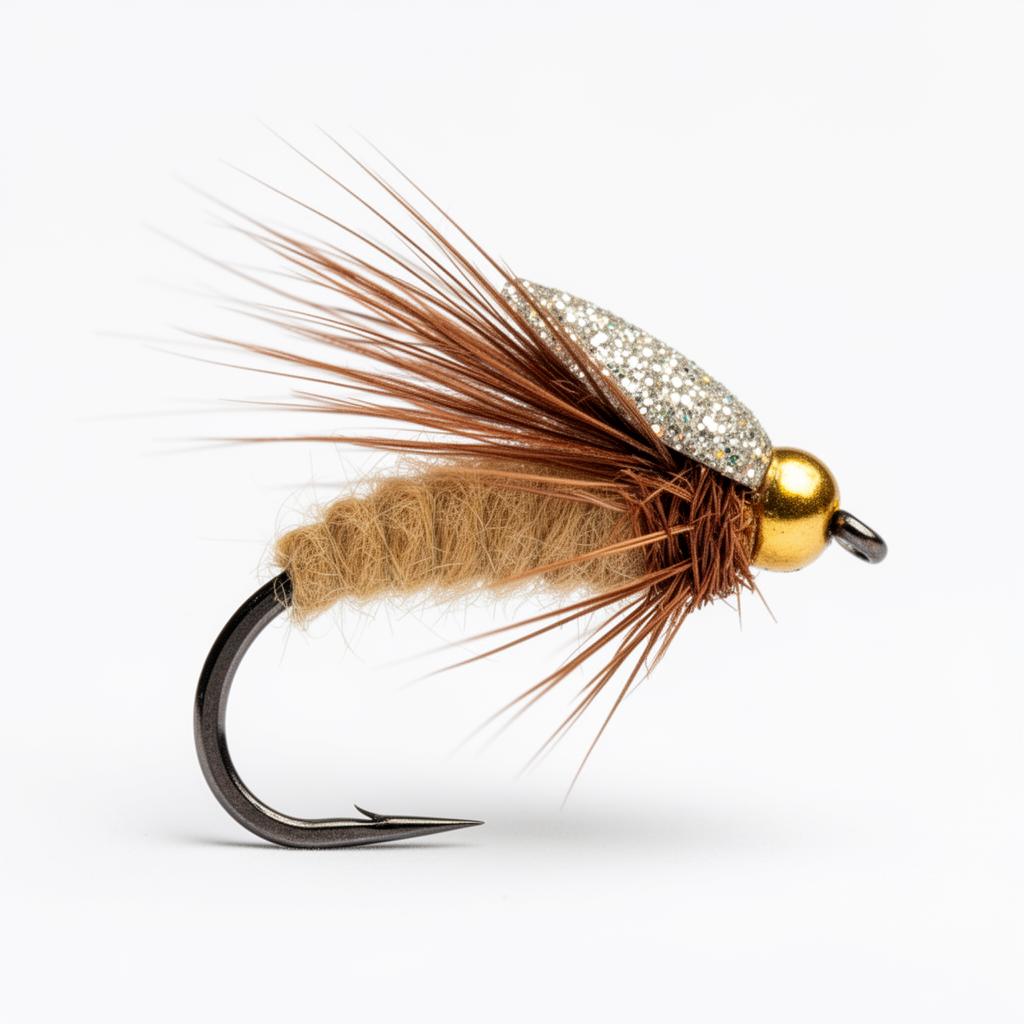
Tan Caddis Pupa
Imitates: Emerging caddis pupa rising to the surface
Quick Reference
- Best Sizes
- #14-18
- Best Season
- Late spring through fall (caddis season)
- Best Conditions
- Just before and during caddis hatches, especially evenings
- Water Temp
- 55-68°F
- Recommended Tippet
- 5X
How to Rig It
Drop 18" below an Elk Hair Caddis as a dry-dropper, or swing as a wet fly across riffles.
How to Present It
Dead-drift through the head of a riffle, then swing it on the rise at the end of the drift. The lift imitates a caddis pupa shooting toward the surface to emerge.
Why It Works
Caddis pupae rise fast through the water column to emerge — trout key on the rising motion. The sparkle wing case and gold bead reflect light like trapped air bubbles inside a real emerging pupa.
History
The bead-head caddis pupa style emerged in the 1990s as anglers realized swinging wet flies imitated emerging caddis better than dead-drifting. Gary LaFontaine's research codified the importance of the air-bubble trigger.
Pro Tip
In the last hour of light during a caddis hatch, fish a tan pupa on the swing across riffle tailouts. Expect aggressive grabs as fish chase emerging bugs to the surface.
Frequently Asked Questions
What's the difference between a Tan Caddis Pupa and a Sparkle Pupa?+
Both imitate emerging caddis. The Sparkle Pupa has a bubble of trailing Antron; the bead-head pupa has a tungsten bead and rides deeper before swinging up.
When should I swing the caddis pupa vs dead-drift?+
Dead-drift before the hatch starts; swing during active emergence. The swing imitates the rising pupa and triggers reaction strikes.
Not sure if Tan Caddis Pupa is right today?
Get a fly recommendation based on live water temp, flow, sky, and time of day for any river in the US.
Open Fly Advisor Map
Map Fly Guide