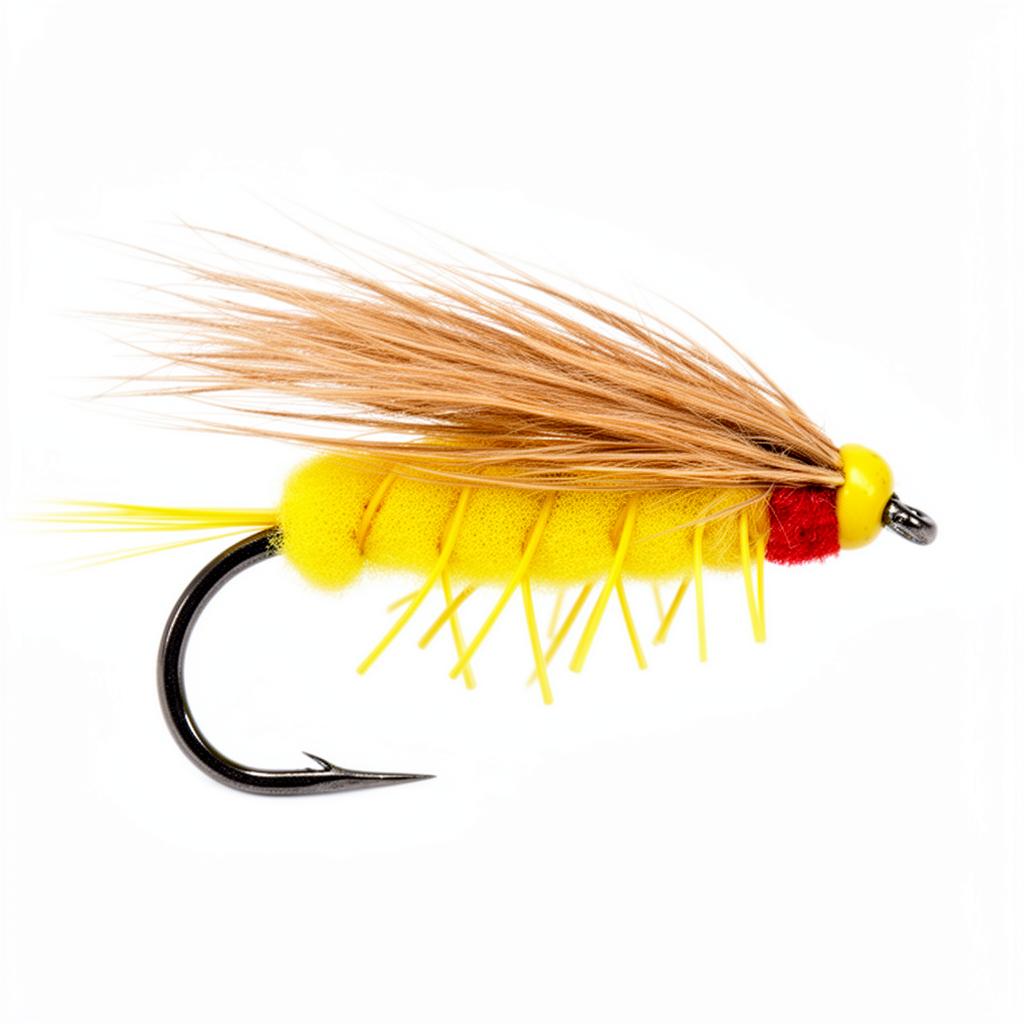
Yellow Sally
Imitates: Adult Isoperla / Little Yellow Stonefly
Quick Reference
- Best Sizes
- #14-16
- Best Season
- Summer (June-August)
- Best Conditions
- Riffles and pocket water on Western and tailwater rivers during the hatch
- Water Temp
- 55-68°F
- Recommended Tippet
- 5X mono
How to Rig It
Single dry, or as the dry in a hopper-dropper rig with a small nymph trailing 18" below. Great as a Salmonfly droopper indicator too.
How to Present It
Cast across-and-up to riffle edges, soft seams, and shallow pocket water. Dead-drift with occasional twitch. Yellow Sallies are smaller and more delicate than salmonflies — a soft presentation matters.
Why It Works
The bright yellow belly and red butt are the two visual triggers — trout key on the egg-laying females whose abdomens turn red before depositing eggs. The fly is small enough to fit any leader but visible enough to see in fast water.
History
Isoperla species (Little Yellow Stoneflies) hatch on virtually every freestone river in North America in summer. Modern foam-body Yellow Sally patterns evolved from classic hair-wing styles in the 1990s.
Pro Tip
When you see fish refusing your salmonfly or hopper, drop down to a #14 Yellow Sally. The smaller silhouette gets eaten when bigger flies get inspected and refused.
Frequently Asked Questions
What is a Yellow Sally fly?+
A dry fly imitating the adult Little Yellow Stonefly (Isoperla genus), which hatches on freestone rivers across North America in summer.
When do Yellow Sallies hatch?+
June through August on most Western and tailwater rivers. Peaks in late afternoon and evening when water temps hit 60-65°F.
Why does the Yellow Sally have a red butt?+
It imitates egg-laying females, whose abdomens turn red before depositing eggs. Trout key on the bright color and target gravid females.
Not sure if Yellow Sally is right today?
Get a fly recommendation based on live water temp, flow, sky, and time of day for any river in the US.
Open Fly Advisor Map
Map Fly Guide