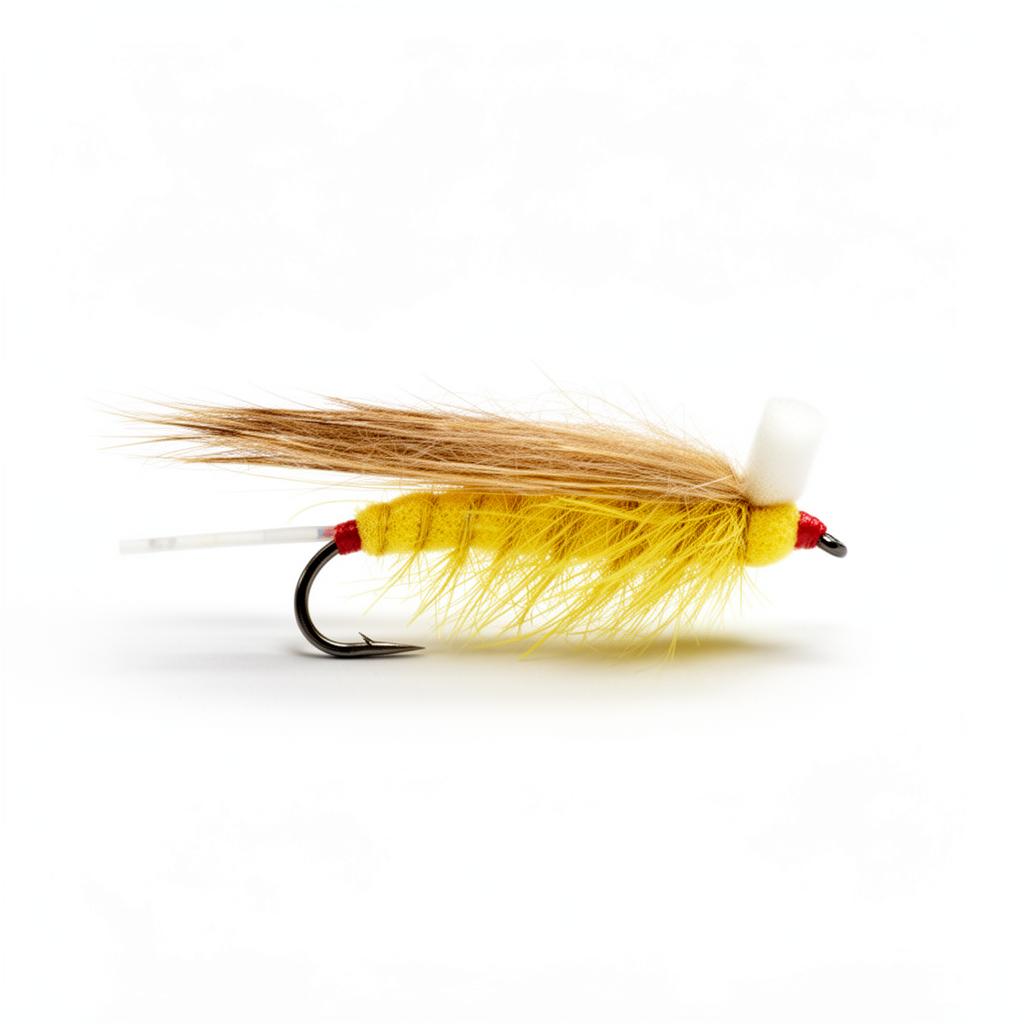
Yellow Sally Nymph
Imitates: Yellow stonefly nymph (Isoperla) before emergence
Quick Reference
- Best Sizes
- #14-16
- Best Season
- Spring through summer (peaks just before hatch)
- Best Conditions
- Riffles, fast pocket water, freestone rivers in the weeks leading up to the Yellow Sally hatch
- Water Temp
- 50-65°F
- Recommended Tippet
- 5X fluorocarbon
How to Rig It
Trailed 18" off a heavier point fly or under an indicator. Tight-line nymph through riffles and pocket water.
How to Present It
Dead-drift along riffle bottoms and through pocket water. Naturals migrate to the bank to emerge — fish near the edges of riffles where nymphs concentrate before crawling out.
Why It Works
In the weeks before the Yellow Sally hatch, nymphs become active and drift in the current. Trout pre-key on them. The yellow-tan body and slim profile match the natural perfectly.
History
Isoperla nymphs are present in trout rivers year-round, but become a primary food source 2-3 weeks before the adult hatch in summer. The pattern fills a gap between standard mayfly nymphs and big stonefly nymphs.
Pro Tip
Two weeks before you expect the Yellow Sally hatch, switch your dropper to a yellow stonefly nymph. Trout pre-feed on the migrating nymphs — you'll out-fish anglers waiting for the dries.
Frequently Asked Questions
What does a Yellow Sally nymph imitate?+
The Little Yellow Stonefly nymph (Isoperla) before it emerges as an adult. A key food source on freestone rivers in early summer.
When should I fish a Yellow Sally nymph?+
Two to three weeks before the adult Yellow Sally hatch (typically late May through July). Trout key on migrating nymphs before the dry-fly action starts.
Not sure if Yellow Sally Nymph is right today?
Get a fly recommendation based on live water temp, flow, sky, and time of day for any river in the US.
Open Fly Advisor Map
Map Fly Guide