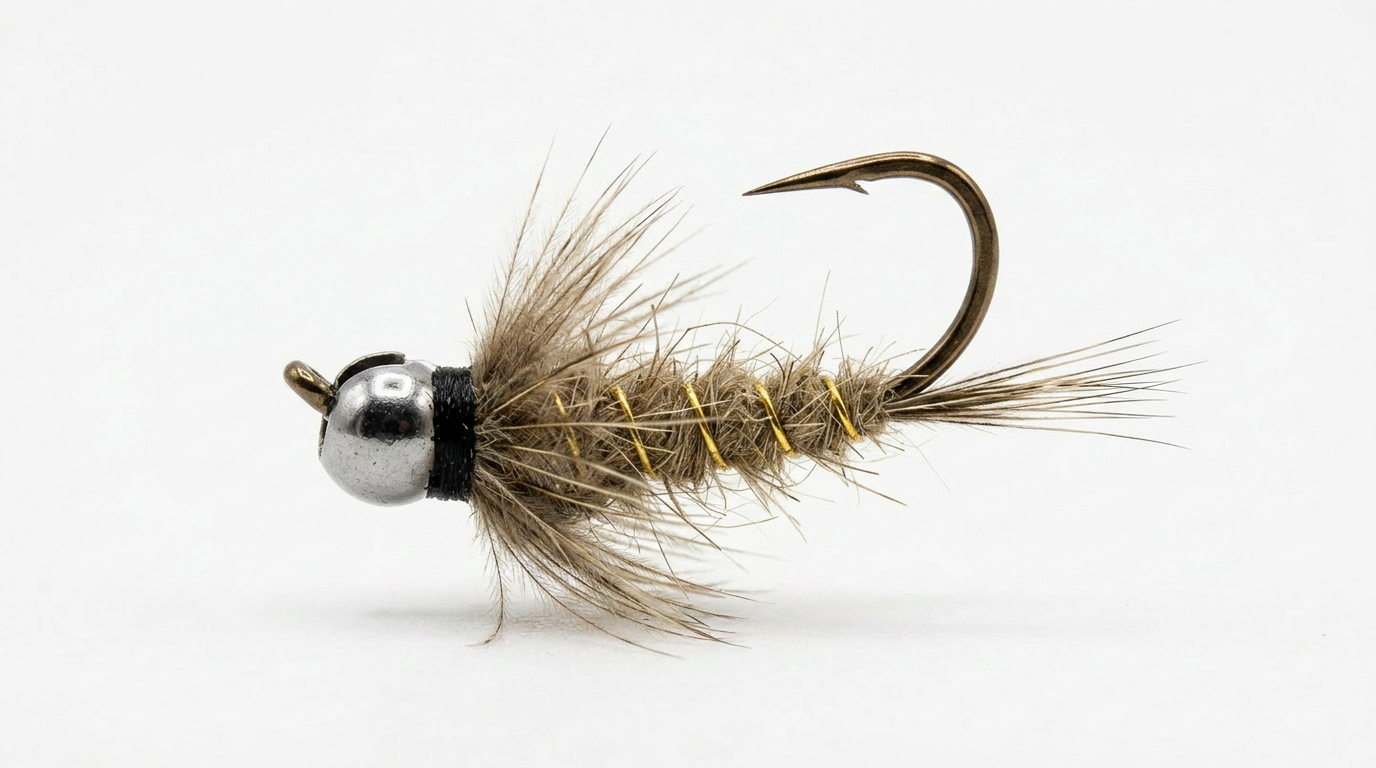
Tungsten Jig Hare's Ear
Imitates: Mayfly nymph, caddis pupa, generic buggy nymph (Euro nymphing)
Quick Reference
- Best Sizes
- #12-18
- Best Season
- Year-round
- Best Conditions
- Pocket water, deep runs, Euro nymphing, freestone rivers
- Water Temp
- 40-65°F
- Recommended Tippet
- 4X-5X fluorocarbon (or sighter rig)
How to Rig It
Point fly on a Euro nymph rig with a smaller perdigon or frenchie 18" above. Or fish under an indicator with split shot.
How to Present It
Tight-line through pocket water, ticking the bottom. Lift at the end of the drift — most strikes come on the rise.
Why It Works
The slotted tungsten bead drops the fly to the bottom in fast water faster than any traditional Hare's Ear, and the jig hook rides point-up to dramatically reduce snags on rocks. The buggy hare's mask dubbing imitates everything trout eat — caddis, mayflies, scuds.
History
The jig nymph movement came from European competition fly fishing in the 2010s. Combining tungsten beads with jig hooks was a small change with massive results — guides on the Provo, San Juan, and Madison switched almost overnight.
Pro Tip
Use a 3.5mm tungsten bead for water under 3 feet, 4.0mm for deeper runs. Match bead weight to current speed and depth — the right rig has the fly ticking bottom every 2-3 drifts, not dragging or floating.
Frequently Asked Questions
What is a jig nymph?+
A nymph tied on a jig hook (60° or 90° bend) with a slotted tungsten bead. The fly rides hook-point-up, dramatically reducing snags and improving hook-up rates on bottom-feeding trout.
Jig Hare's Ear vs Frenchie — when to fish each?+
Jig Hare's Ear is the buggy attractor — fish it as the point fly. Frenchie is the slim 'hot spot' attractor — fish it above as the dropper. Together they cover everything.
Not sure if Tungsten Jig Hare's Ear is right today?
Get a fly recommendation based on live water temp, flow, sky, and time of day for any river in the US.
Open Fly Advisor Map
Map Fly Guide